
Nov 6, 2026 · Lachlin Miller
I went to Niseko in February 2025 for one reason: the snow - and soon realised there are always countless more reasons to come. Hokkaido's north-western corner catches Siberian storms that cross the Sea of Japan and dump some of the lightest, driest powder anywhere on earth, and February is the heart of it. Here is what I loved about the mountain, and a few things worth knowing before you go.
On this trip, I stayed with friends, so there is no first-hand accommodation review in this piece. I’ve included a handpicked selection of Maison V’s favourite properties from first-hand visits and what our clients and friends have loved.
Getting there: a train, a plane and a van
Niseko is not overly easy to get to, and I say that as someone who enjoys the journey. I came from Kyoto. That meant the Haruka express to Kansai International (about 75 minutes), a two-hour flight to New Chitose outside Sapporo, and then the part everyone underestimates: two and a half to three hours by road to the resort, longer in a storm. Door to door it was most of a day.
The road leg is where the trip is won or lost. I had a private van transfer booked and would do the same again. In winter the drivers know the road, you leave when your flight lands rather than when a timetable says, and nobody is dragging ski bags between a bus stop and a hotel on an icy street in the dark.
| Option | What it costs (one way) | Notes |
|---|---|---|
| Private van, 1–8 people | From about ¥45,000 (about US$285; 1–2 pax) to ¥54,000 (about US$342; 3–8 pax) | Door to door; night surcharge after 21:00 |
| Shared resort shuttle | About ¥6,000 (about US$38) adult, ¥5,000 (about US$32) child | Drops at Hirafu Welcome Center; fixed departure windows |
| Train to Kutchan + taxi | A few thousand yen | Slow, with a change at Otaru; fine for the adventurous, not for a family with gear |
If you are coming from Tokyo rather than Kyoto, the plane is the same: Haneda to New Chitose is the busiest air route in the world and there is a flight most hours. Book the transfer the day you book the flight; private vans in February sell out.
Before we begin: A short history of Niseko's long history
Skiing here is older than you would think. In 1912 an Austrian officer, Theodor von Lerch, climbed and skied Mount Yotei, the Fuji-shaped volcano that dominates every photograph of the valley. By 1927 the local papers were calling the area "the St. Moritz of the East", and in 1964 Kutchan, the town below the resort, and St. Moritz formally became sister cities.
The first lifts at what is now Grand Hirafu opened on 17 December 1961. Annupuri followed in 1972, the year of the Sapporo Olympics; Niseko Higashiyama, now Niseko Village, in 1982; and Hanazono, on the northern flank, in 1992. In November 1993 the four were linked by Hokkaido's first automated common lift pass, and by 1998 every lift on the mountain was on one ticket. That is the Niseko United you ski today: four independently owned resorts wrapped around one peak, Mount Annupuri, meeting at the top.
The second act began in the early 2000s, when Australians discovered that a mountain with eight hours' time difference to nothing, no jet lag from the east coast, and fifteen metres of snow a year was sitting largely empty during Japan's long recession. Investment followed, first Australian, then Hong Kong and Singaporean, and the sleepy onsen village of Hirafu became the international resort town it is now, with the Park Hyatt at Hanazono and a Ritz-Carlton Reserve in Niseko Village as the markers of its third act. The locals still ski it on weekdays.
The skiing
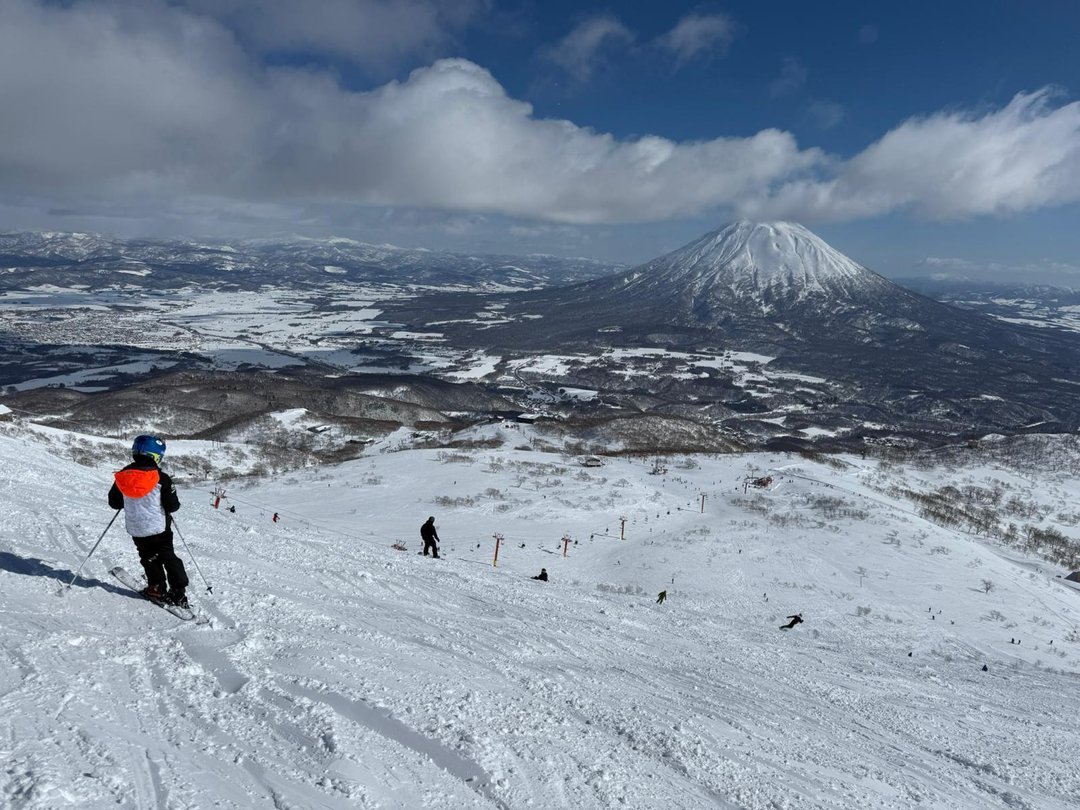
All photographs are our own, taken on our trips.
The snow. Niseko gets some of the lightest, fluffiest powder in the world, and in February it gets it most days. The storms come straight off the Sea of Japan, cold and dry, and the snow lands like flour. Skiing it is nothing like skiing the Alps: there is no crust, no wind slab in the trees, and when you fall you simply disappear and laugh. I had days where it snowed from first lift to last and the runs were refreshed by lunch.
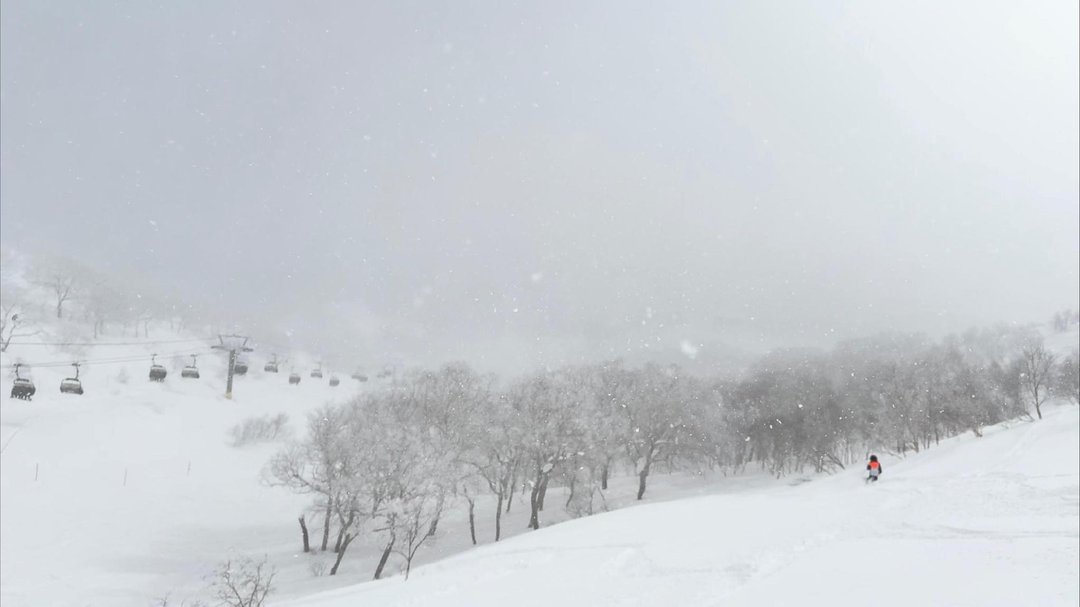
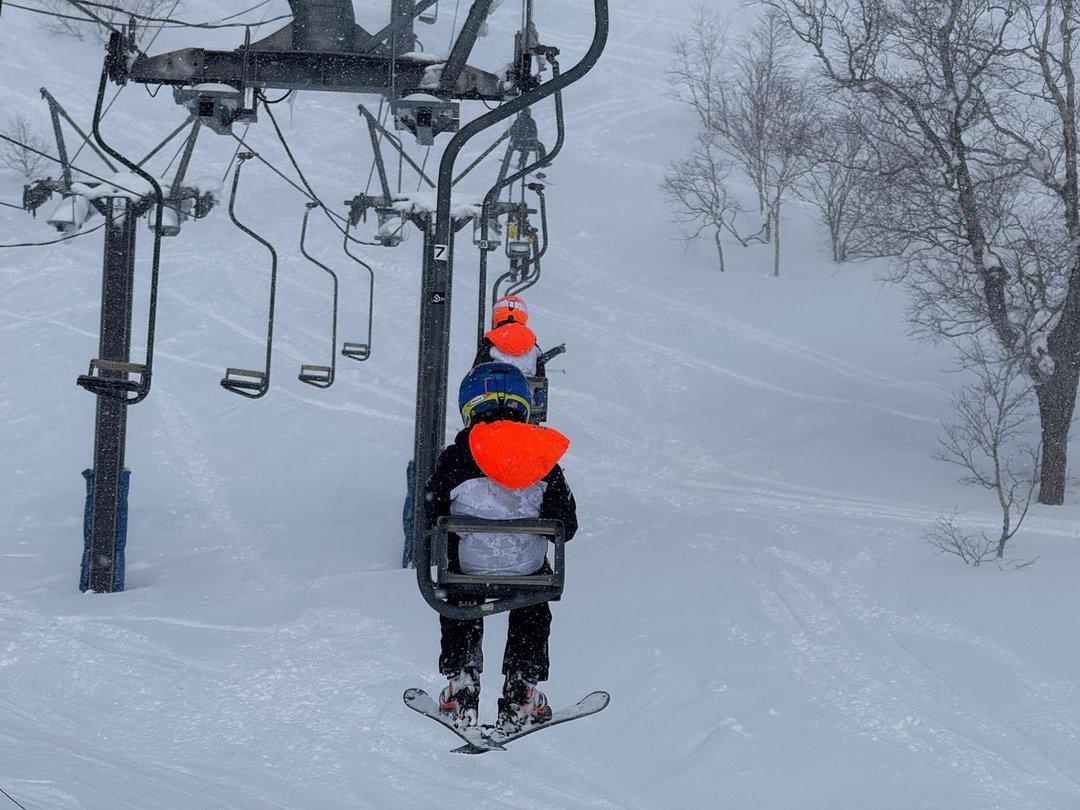
The pizza box. Niseko's most famous lift is also its most ridiculous. King Lift #4, the single-seat chair at the top of Grand Hirafu, is a row of flat metal pads the size of a pizza box, no bar, no hood, swinging slowly up the last pitch to the peak in whatever the weather is doing. Everyone grumbles about it and everyone photographs it. On a storm day it is cold and glorious; on a blue day it is the best seat on the mountain. It was still running in February 2025, with Hirafu's new heated six-seater humming below it, and I hope they never replace it.
The gates. What sets Niseko apart from other Japanese resorts is that off-piste is legal and organised. Along the boundary are numbered gates; when ski patrol opens them, you ski through into untouched tree runs and bowls that drop back into the resort. Nobody ducks ropes here; the Niseko Rules are strict and the search-and-rescue charge starts at ¥100,000 (about US$634). Carry a beacon, wear a helmet, and on your first visit take a guide for a morning. The trees between Hanazono and Hirafu after a night of snow were the best skiing of my winter.
Four resorts, one mountain. Hanazono, Grand Hirafu, Niseko Village and Annupuri wrap around Mount Annupuri and join at the top, so on one pass you can start in Hanazono and finish with a beer in Annupuri. Each has a character: Hanazono is the modern, family-friendly one with the Park Hyatt; Hirafu is the busy centre with the night skiing and the town; Village is quieter with the big hotels; Annupuri is where locals go for long, gentle groomers and the lightest crowds.
Who it suits. This is not a steep mountain. The pitch is mostly mellow, the groomers are wide, and the powder is forgiving, which makes Niseko an unusually good place for families and for people new to skiing. A beginner here will have a better week than a beginner almost anywhere in Europe. Experts come for the snow and the trees, not the gradient.
The honest part
Five things to plan around before you book.
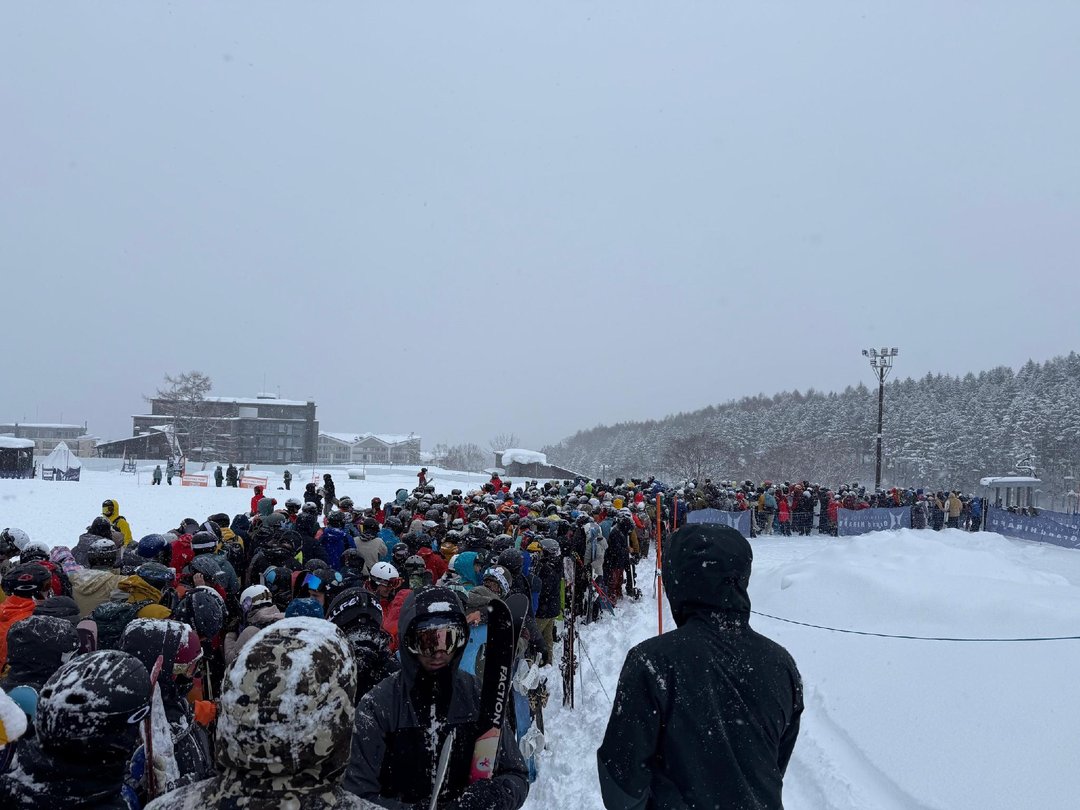
It gets very busy. February is peak season and Chinese New Year lands in it most years. On a powder morning the Hirafu gondola queue can be forty minutes, and the lifts to the peak back up behind it. Beat it by starting at Hanazono or Annupuri, by skiing through lunch, or by getting the first lift and taking a long lunch when everyone else arrives.
It is not steep. If you measure a mountain by its couloirs you will find Niseko tame. The pitch rarely gets past what a confident intermediate can handle, and the steeper lines are short. People who need steep come for the snow and accept the trade.
It is not easy to get to. A day of travel from Kyoto or Tokyo, longer from Europe, and the last leg is a winter road. Build in a night in Sapporo on the way home if your flight is early.
The streets are ice. This one caught me out. Hirafu's roads are polished by foot traffic and freeze hard every night, and walking to dinner you can go from upright to flat on your back in one step. Buy a pair of rubber slip-on spikes for your shoes at the convenience store on day one; they cost about ¥1,500 (about US$10) and I watched people who did not have them fall crossing the road.
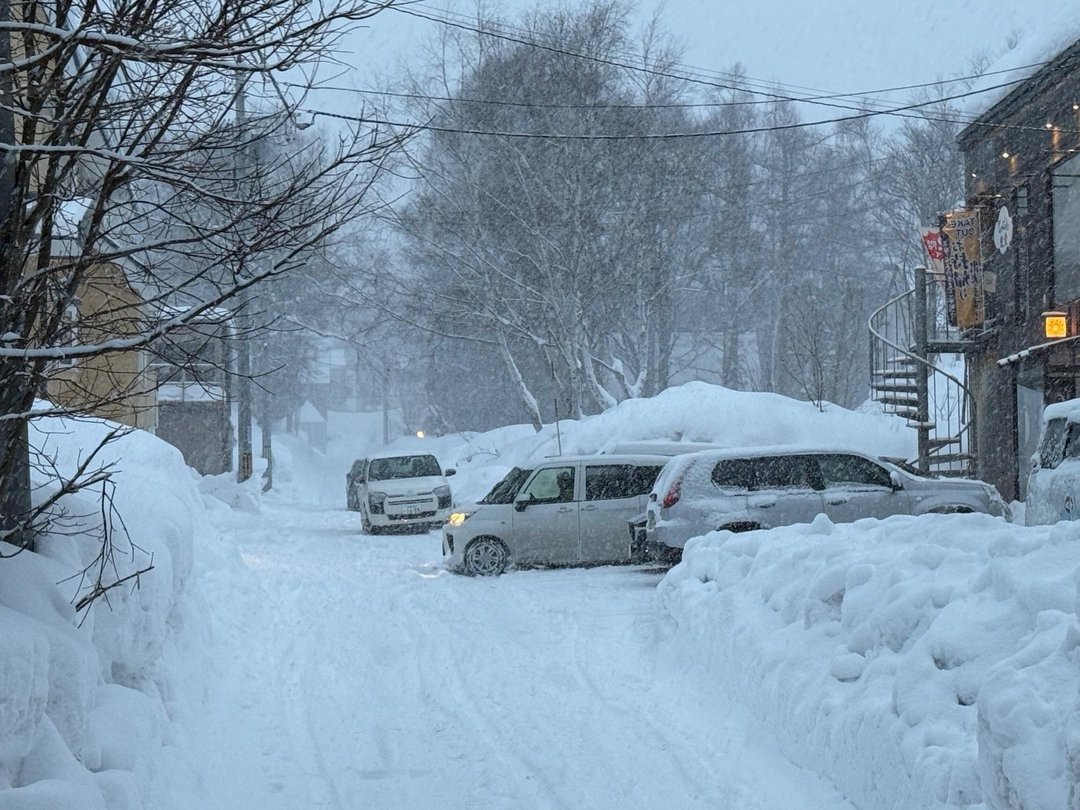
This is what the village looks like in February. The roads are packed snow, the ploughs push the fresh powder into mounds taller than the parked cars on both sides, and the walk from the door to the lift is through a white corridor. It is beautiful and it is slow going, which is why the spikes matter, and why the next point does too.
Very little is truly ski-in, ski-out. Hirafu is a village that grew up around the lifts rather than a purpose-built resort, so most places to stay, even good ones, involve a walk with your skis on your shoulder, up a hill, on the ice I have just described. The hotels know this and run shuttle vans to the gondola on a loop through the day, and once you are in the rhythm of it the van is painless. But if a hotel listing says "ski-in/ski-out", ask exactly what that means, and if being on the snow from the door matters to you, say so when you book; the handful of places that deliver it are listed below.
Leave your skis at home
Rent in Niseko. The skis you own were almost certainly chosen for European or North American snow, and a 75 mm-waisted carving ski in forty centimetres of Hokkaido powder is a submarine. You want something 100 mm or wider underfoot, and the rental shops here stock exactly that because it is all anyone asks for. Add the airline fees and the schlep through three transfers and the case for carrying your own collapses.
| Shop | Where | Adult day rate (skis or board) | Why |
|---|---|---|---|
| Rhythm | Main Hirafu store, plus a shop at Setsu Niseko | Standard ¥7,800 (about US$49), Premium ¥10,100 (about US$64) (boots extra; 10% off booking 48 h ahead) | Biggest fleet in town, 150+ premium models, free shuttle pick-up on day one, swap skis as conditions change |
| Niseko Sports | Hirafu, several outlets | Comparable | Long-established, good for families and kids' packages |
| Hotel ski valets | Park Hyatt, Ritz-Carlton Reserve, Setsu, Skye, Ki | Premium | Fitted in your hotel; worth it if you are staying there |
Bring your own boots if you have them; they are the one thing worth the weight. Book the Premium tier, ask for a powder ski, and on a groomer day swap it for something narrower at no charge.
Where to stay: the Maison V shortlist
In peak season (January to late February) the top tier runs roughly ¥200,000 to ¥600,000 (about US$1,270 to US$3,800) a night, and the best rooms are gone by October. We can usually add breakfast, credit and upgrades through our partner programmes at these properties.
| Hotel | Area | Style | Why we book it |
|---|---|---|---|
| Park Hyatt Niseko Hanazono | Hanazono | Full-service international luxury, ski-in/out | Best all-round hotel on the mountain: onsen, spa, several restaurants, kids' programme, direct access to the Hanazono lifts and the quietest side of the resort |
| Higashiyama Niseko Village, a Ritz-Carlton Reserve | Niseko Village | Ryokan-inspired, onsen-focused, ski-in/out | For couples who want silence and a private onsen; the service is the best in Hokkaido |
| Zaborin | Hanazono outskirts | 15-villa ryokan in the forest | Every villa has indoor and outdoor onsen; kaiseki dinner is the point. Not ski-in, a short drive, and that is why it is peaceful |
| Setsu Niseko | Central Hirafu | Modern design tower, hotel rooms and residences | Five minutes' walk to the gondola, the best restaurants in town downstairs, indoor pool and onsen; for groups who want the village on the doorstep |
| Skye Niseko | Hirafu | Apartments with full kitchens, rooftop onsen | Two minutes from the gondola; our pick for families and friends travelling together |
| Ki Niseko | Hirafu | Boutique hotel | Under 100 m from the King Gondola, proper hotel service, sensible pricing for Hirafu |
| Muwa Niseko | Hirafu | Ultra-luxury residences, ski-in/out | Private in-residence onsens; the newest and most discreet address in Hirafu |
If you are looking for properties at the intersection of price and performance, the Green Leaf and Hilton in Niseko Village and a well-chosen Hirafu apartment all put you on the lifts for far less. Ask us; the right answer depends on who is in the group and what you are looking for.
For the ultra-luxury, bespoke chalet experience: Seasons Niseko. Above the hotels sits a different way to do Niseko. A good friend of mine owns Seasons Niseko. It is a pair of five-bedroom chalets, Seasons One and Seasons Two, in a private gated compound in the Annupuri forest, each with its own heated pool, sauna and spa, a chef and sous-chef, 24-hour butler service, two chauffeured vehicles on call, and ski fitting done in the boot room on arrival. It brings together the best of everything in Niseko with every detail perfected: the dinners come to you, the car is waiting at the lift, and the open bar is stocked with Japanese whisky and sake. Pricing is on request and the winter weeks go a year ahead. The Australian Financial Review's feature on it is here: Inside Seasons Niseko. We can organise that for you too, from the chalet to the private guide.
Eat: Not your everyday “ski food”
No ski town in the world feeds you like Niseko. Hokkaido is Japan's larder: the dairy, the potatoes, the lamb, the crab, the sea urchin and the scallops all come from here, and the village has the restaurants to match. Book dinners before you fly; the good rooms are full a month out in February.
Hokkaido meibutsu (famous foods): what to order
Jingisukan. Hokkaido's national dish: thin-sliced lamb grilled on a domed iron plate with onions and bean sprouts, named after Genghis Khan. Niseko Loft Club has been doing it since 1989. Order it at least once.
Soup curry. A Sapporo invention, a spiced broth with a whole chicken leg and chunky Hokkaido vegetables. Markie Curry on the main road in Kutchan is the local favourite; it is the best lunch after a cold morning.
Miso ramen. Sapporo's style, rich and buttery, often with corn. See the ramen hut below.
Kaisendon. A bowl of rice under uni, ikura, scallop and crab from the Japan Sea ports an hour away. Breakfast of champions at Boyo-so or any sushi counter.
Hokkaido dairy. The milk, butter and soft-serve are famous nationally. Niseko Milk Kobo, on the road to Niseko Village, does cream puffs and soft-serve with a view of Yotei; the pizzeria next door, Mandriano, uses its cheese.
Yotei potatoes. The volcanic soil around the mountain grows the best potatoes in Japan. They turn up as butter-potato at the izakaya and in the raclette at Yummy's.
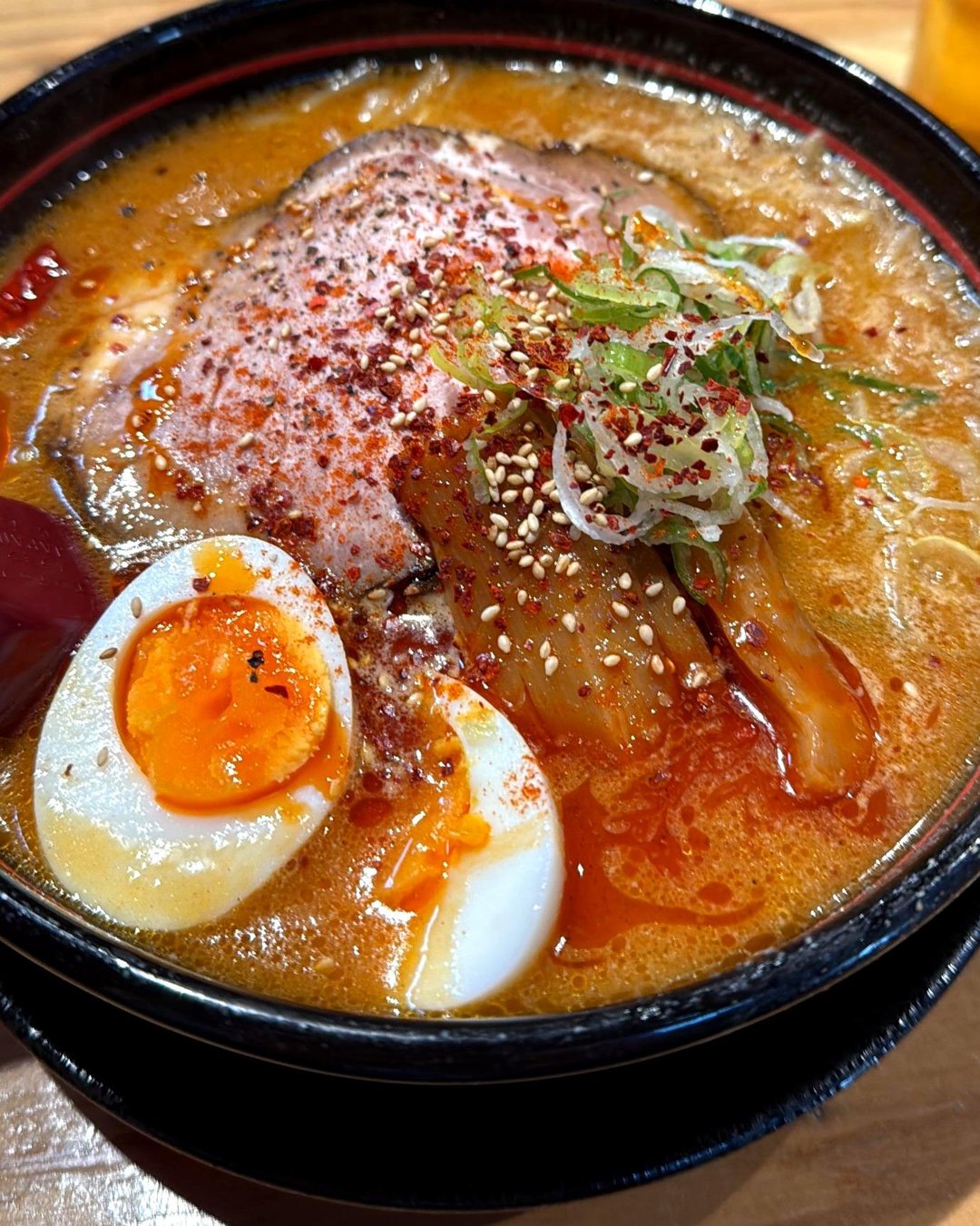
On the mountain
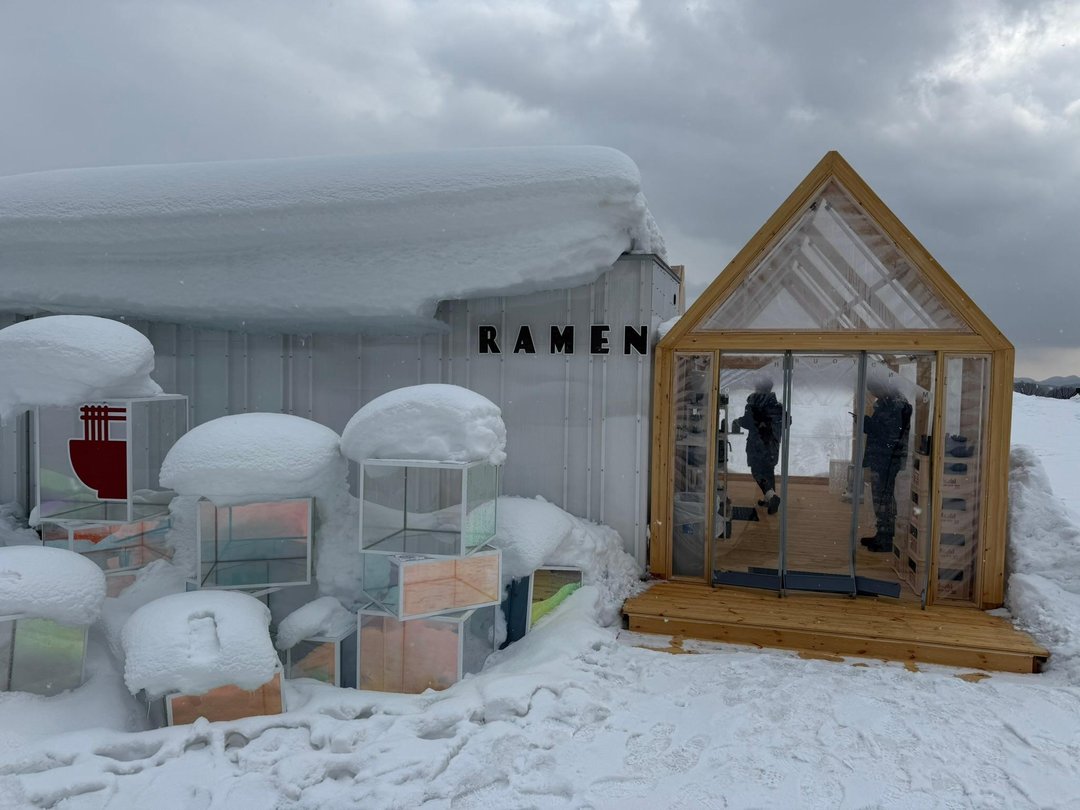
The ramen hut is the lunch everyone remembers: a corrugated shack at the top of the lifts, roof under a metre of snow, a glass hut beside it to shelter in, and a bowl of hot miso ramen in a blizzard. It is not fine dining and it does not need to be. Below it, Boyo-so at mid-Hirafu does the classic Japanese ski-lodge menu (curry rice, kaisendon, hot soba), and Hanazono's EDGE is where to go when you want a proper sit-down lunch with wine.
In the village
| Restaurant | What | Why |
|---|---|---|
| Yummy's Pizza | Pizza, raclette, beef stew, risotto; 17:00–23:00 (listing) | Our favourite pizza in Niseko, and we take pizza seriously. A warm wood-panelled room in the heart of Hirafu, proper crust, Hokkaido cheese, and a raclette that is the right thing after a powder day. Book; it is small and everyone knows |
| Rakuichi | Soba kaiseki, 16 seats, two seatings a night | Hand-cut soba by Rai-san; the hardest table in town and worth every bit of the chase |
| Kamimura | French-Japanese tasting menu | The village's fine-dining benchmark; Hokkaido produce treated with French technique |
| Sushi Shin (Sansui Niseko) | Edomae sushi counter | Branch of Sapporo's three-Michelin-star Sushi Miyakawa; the best sushi on the mountain |
| Bang Bang | Izakaya | Hirafu's institution: venison, yakitori, sashimi, huge menu, loud and happy |
| Hirafuzaka | Izakaya | Japanese comfort food, no reservations, the place to go when everything else is full |
| Niseko Loft Club | Jingisukan | Lamb on the iron dome since 1989; go hungry |
| Markie Curry (Kutchan) | Soup curry | The local lunch; a taxi down to Kutchan is worth it |
| Torimatsu (Kutchan) | Yakitori | Forty years of charcoal; Anthony Bourdain ate here in 2011 |
| Masonry (Niseko Kyo) | Mediterranean sharing plates over Japanese charcoal | Ski-in/out, the modern Niseko style |
A note on Kutchan: the working town fifteen minutes below Hirafu has the restaurants locals eat at, at half the price. One night down there is part of the trip.
Nightlife
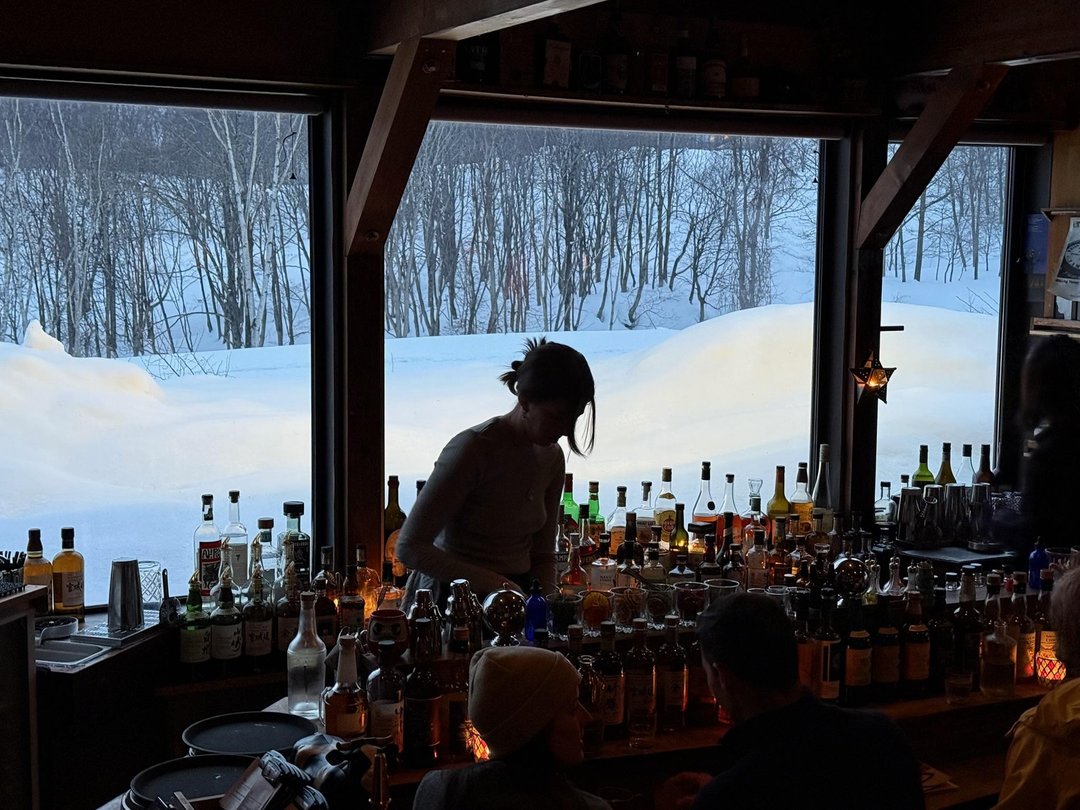
For a village you can walk end to end in fifteen minutes, Hirafu goes surprisingly late. The rhythm is onsen at four, dinner at seven, and then the bars, which run past two.
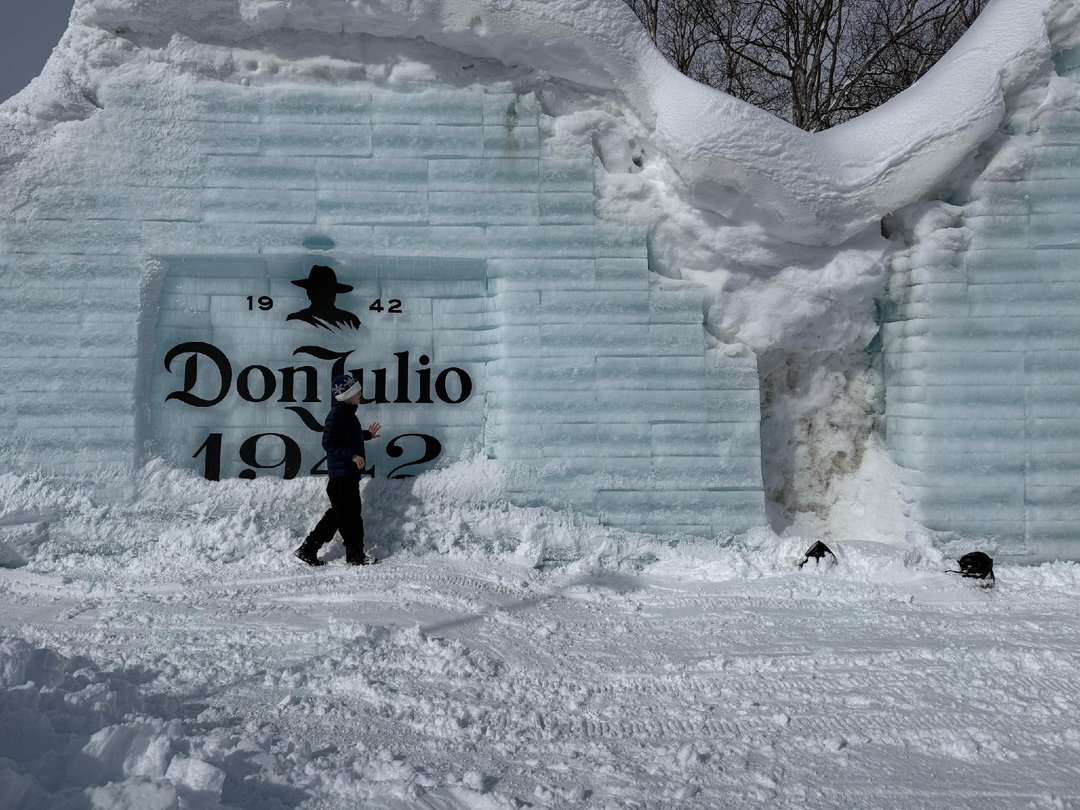
Start with ice. Every winter a brand builds an ice bar in the snow, and in 2025 it was Don Julio: a bar, walls and counter carved from stacked ice blocks, open-air, tequila served in the cold at the bottom of the slopes. It changes sponsor and site from year to year but there is always one; ask the hotel where it is. Go at the end of the ski day while the light is still good.
Bar Gyu+ (the Fridge Door Bar) - pictured above. You enter through a vintage Coca-Cola fridge door set into a snowbank in lower Hirafu, which is the kind of thing that should be a gimmick and is not. Inside is a low, warm room that Hisashi Watanabe built with his own hands around 1999, with a piano, stacks of records, lanterns, and a back wall of glass looking onto snow-loaded birch trees. The shelves are Japanese whisky: Yamazaki, Hakushu, Miyagikyo, Yoichi from up the coast, plus a serious sake and cocktail list and hot drinks for the walk home. Get there at dusk; the light through that window is the photograph above, and by eight there is a queue at the fridge.
Everything else, in roughly the order you will visit it:
Bar Moon (Otsukisama) — small, dark, beautifully made cocktails upstairs from an izakaya; the second-best bar in town.
Tamashii Bar — the Australian-run live-music room; loud, friendly, open very late.
Wild Bill's — the original Hirafu party bar, now in its second decade; table-dancing on powder nights.
Hirafu izakaya counters — Bang Bang and Hirafuzaka double as the pre-bar; a highball and a skewer at the counter is a Niseko ritual.
Hotel bars — the Park Hyatt's and Setsu's bars are where to go when you want a quiet drink and a view of the mountain at night.
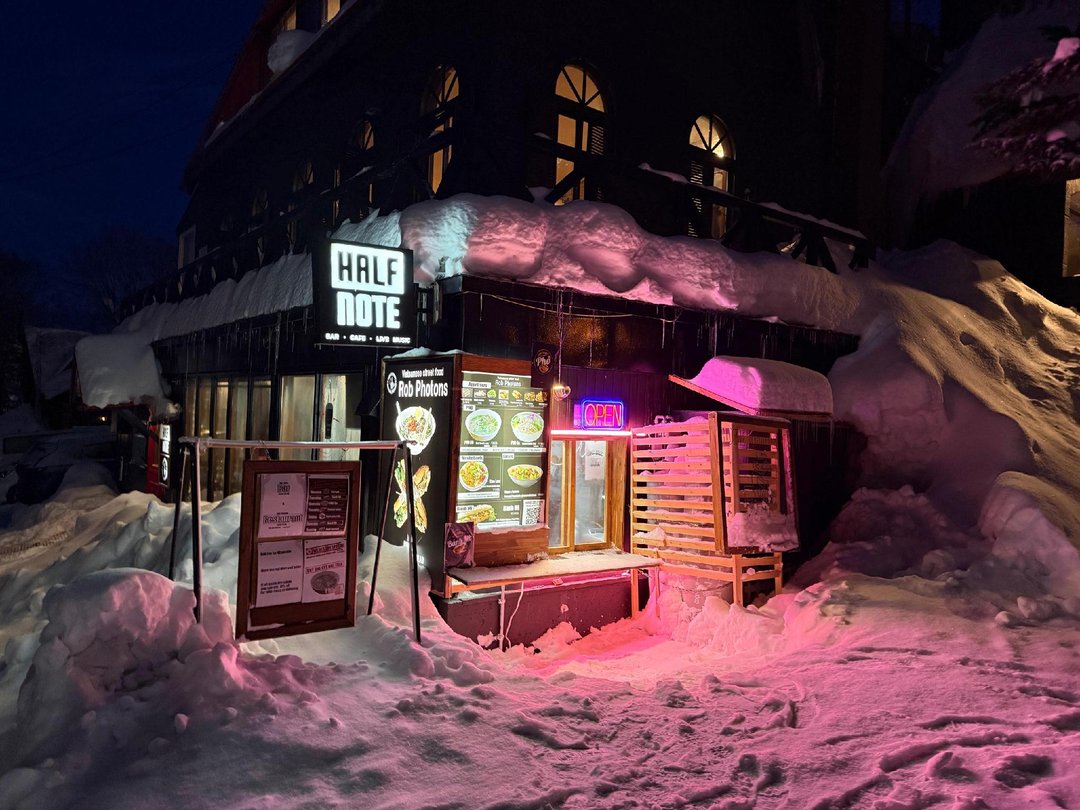
Half Note is the one to add to that list: a bar, café and live-music room dug into a snowbank on the Hirafu slope, neon OPEN sign glowing pink on the drifts, and a hatch beside the door serving Vietnamese street food (pho, banh mi, noodle bowls) until late. It is the easy, no-plan evening: a bowl at the window, a beer inside, and whoever is playing that night.
Night skiing at Hirafu runs until 20:30 in peak season, which lets you ski under the lights after dinner and still make the fridge door before the queue.
What it costs, and how Niseko compares
Niseko is the most expensive ski resort in Japan, and it is still cheaper to ski than Courchevel or Vail. The lift pass is the easy comparison; the gap is in the hotels and restaurants, where Niseko charges international prices and the rest of Japan does not.
| Resort | Adult 1-day pass | Season quoted | Feel |
|---|---|---|---|
| Niseko United (all mountain) | ¥13,500 (about US$86) peak (24 Dec–28 Feb); ¥12,600 (about US$80) regular; ¥8,800 (about US$56) early/spring | 2026–27 | International resort town; the most powder, the most people, the best food |
| Rusutsu | ¥12,000 (about US$76) online, ¥16,200 (about US$103) at the window | 2025–26 | 90 minutes from Niseko; quieter trees, one big hotel, no town |
| Hakuba Valley (10 resorts) | ¥11,100 (about US$70) | 2026–27 | Steeper, bigger vertical, closer to Tokyo; snow heavier than Hokkaido |
| Myoko (4-resort pass) | ¥9,500 (about US$60) | 2025–26 | Deepest snowfall in Honshu, old onsen towns, few foreigners |
| Kiroro | ¥8,800 (about US$56) high season | 2025–26 | An hour from Niseko; as much snow, a fraction of the crowd |
| Nozawa Onsen | ¥7,800 (about US$49) | 2026–27 | The prettiest ski village in Japan; free public onsen, Nagano prices |
Multi-day passes bring Niseko down: a 7-day peak pass is ¥91,500 (about US$580), about ¥13,000 (about US$82) a day, and spring (late March) is ¥8,800 (about US$56) a day with the mountain to yourself.
Where the real difference is. A dinner for two with sake at a good Hirafu restaurant runs ¥20,000–40,000 (about US$127–254); the same meal in Nozawa or Myoko is half that. Peak-season rooms at the top hotels above are ¥200,000–600,000 (about US$1,270–3,800) a night; a lovely ryokan in Zao or Nozawa is ¥30,000–60,000 (about US$190–380) with two meals. Private transfers, guides and rentals are 20–30% above the Honshu resorts. The trade is the snow, the gates, the restaurants and the English-speaking infrastructure; for a first Japan ski trip, or a group with mixed abilities, we still think Niseko is the right call. For a second trip, ask us about Kiroro, Rusutsu and Myoko.
Practical information
When to go. Mid-January to late February for the deepest, most reliable powder; December for cheaper rooms and quieter lifts with the snow already deep; March for sunshine, soft snow and spring pass prices. Avoid Chinese New Year week if you can.
Lift passes. Buy the Niseko United All Mountain pass online before you arrive; it is loaded onto an RFID card you keep. Resort-only passes exist but the mountain is the point. Ikon and Mountain Collective holders get included days.
Money. Cards are accepted almost everywhere in Hirafu, less so in Kutchan; keep ¥20,000 (about US$127) in cash for small izakaya and taxis. 7-Eleven ATMs take foreign cards.
Getting around. Hirafu is walkable with spikes on. A free shuttle links Hirafu, Village, Annupuri and Hanazono during lift hours; taxis are scarce at night, so book your dinner ride through the hotel.
Phone. Get an eSIM on the DoCoMo network before you land; coverage on the mountain is good.
Onsen. Every hotel above has one. Tattoos are accepted at some and not others; ask us and we will match you.
Insurance. Make sure your policy covers off-piste within the gates; many European policies exclude it. Search and rescue outside the gates is charged from ¥100,000 (about US$634).
Children. Hanazono has the best kids' ski school and the gentlest terrain; Hirafu has the most to do after dark. Families usually split the difference and stay in Hirafu, ski Hanazono.
Shoes. Buy the spikes. I am saying it twice because everyone ignores it once and after a tumble wishes they had them.
Should you go?
If you want the deepest, softest snow of your life, a village you can walk around, dinners you will still be talking about in summer, and a mountain that will not frighten the beginners in your group, yes. If you want steep, less crowds and what feels like incredible value for a ski resort, Japan has other mountains and we will happily send you to them. Either way, book early, rent the skis, buy the spikes, and leave the one night (or many!) free for the fridge door.
Maison V plans Niseko trips, from helping you choose the right transport to the dinner reservations and stays with partner benefits at select hotels. Let us know what you’re thinking and we’ll come back with a plan.
More from the Journal: The Tokyo Tangle, Untangled · The Other Blossom: Japan in February.