Hyde Park, New York · 29 September 2024
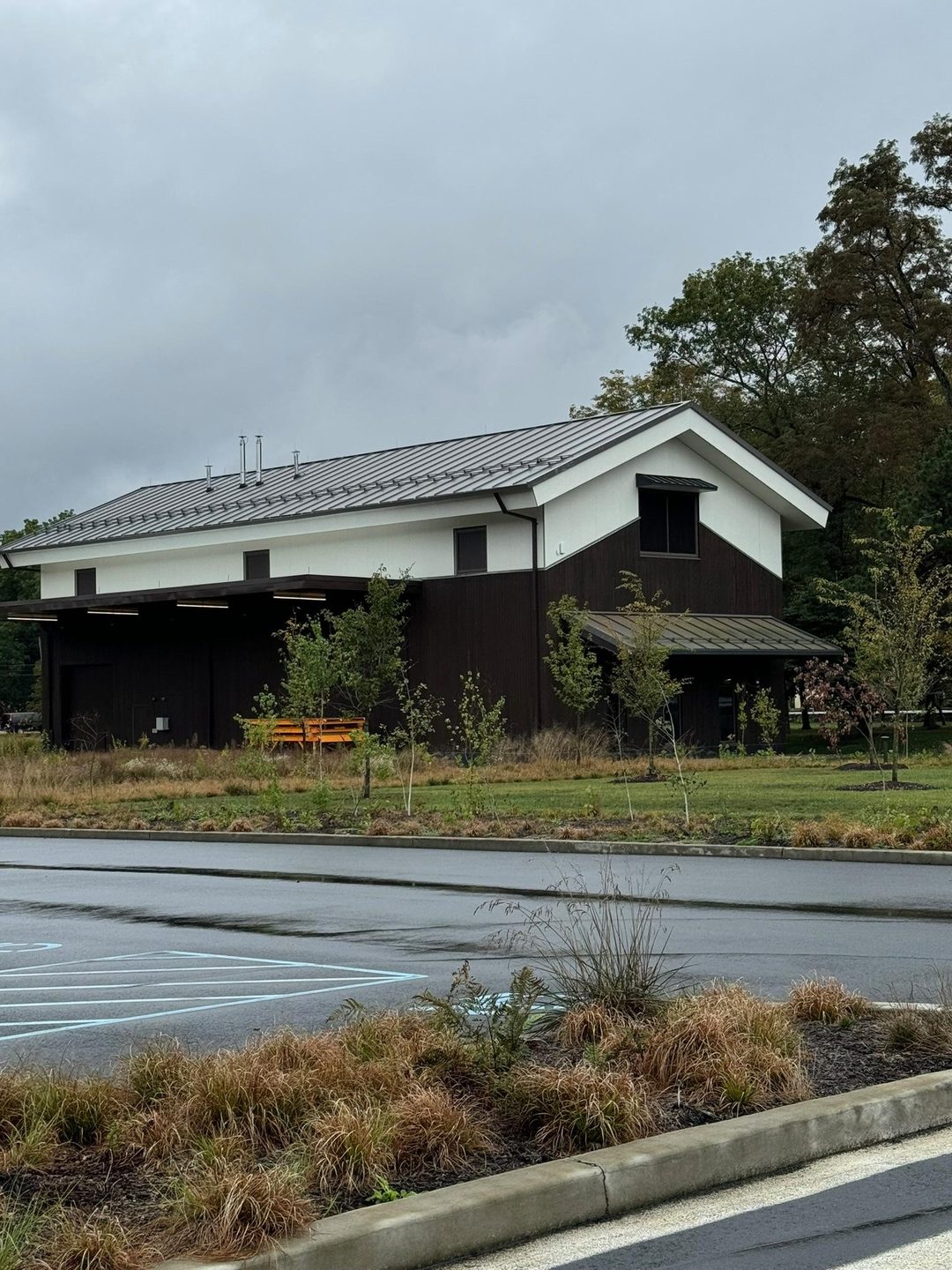
I was born and raised in New York and have spent a good part of my adult life in Japan, which means I have spent years explaining each place to the other. So when Dassai, the Yamaguchi brewery that made junmai daiginjo a household name, announced that its first brewery outside Japan would be not in Tokyo but two hours up the Hudson in Hyde Park, New York, it felt as though two halves of my life had finally agreed to meet for lunch.
I will admit to being sentimental about this one. Sake made in America, from Hudson Valley water, in the state where I grew up, by a brewery whose bottles I have been opening and explaining to friends for the better part of two decades. As a sake professional and the co-founder of a sake brewery outside Japan, I also know exactly how hard it is to make this drink well away from home, and we wanted to see how the most meticulous brewery in Japan had gone about it. And then there was Dassai Blue itself: a sake made only here and sold only in the United States. For someone who has drunk her way happily through the Dassai range in Tokyo for years, a Dassai I had never tasted is a rare and lovely thing.
On Sunday 29 September 2024, Lachlin and I went up to see for ourselves.
The otter festival
Dassai did not start as a luxury brand. It started as a failing one. Asahi Shuzo sits in Osogoe, a hamlet thirty minutes into the mountains outside Iwakuni in Yamaguchi Prefecture, in the far west of Honshu. Yamaguchi was not, in the 1980s, a place anyone associated with good sake. The company was founded in 1948 and spent its first decades making an unremarkable table sake called Asahi Fuji, selling it locally and losing ground to beer, whisky and a shrinking local population. Of the handful of breweries in Iwakuni, it was near the bottom of the pile.
In 1984 Hiroshi Sakurai, then 34, inherited the business when his father died. He had sold sake for a big Kobe brewer for three years but had never made a drop. The brewery was producing about 126 kilolitres a year on sales of roughly ¥97 million, and it was, by his own account, as good as bankrupt.
His response was the business-school case study everyone now quotes: stop making what nobody wanted, and make one thing superbly well. He killed Asahi Fuji, a brand with two centuries of history behind it, and bet the farm on junmai daiginjo, the top grade of sake, made only from Yamada Nishiki, the most expensive rice you can buy for the purpose. The first bottles of Dassai reached Tokyo in 1990. In 1992 came the one that made the name: Dassai 23, with the rice polished down to 23 per cent of its original size, at the time the highest polish anyone in Japan was attempting.
The name itself is a small joke with a serious point. Dassai means “otter festival”, an old local expression for the way the river otters of Yamaguchi would lay their catch out on the bank as if showing it off. The haiku poet Masaoka Shiki borrowed it as a pen name because he scattered his books around his room the same way, and Shiki was the man who dragged haiku into the modern era. The brewery wanted both halves: the playfulness, and the permission to break with tradition.
How a mountain brewery learned to sell
What made Dassai different was not the sake. Plenty of breweries make lovely junmai daiginjo. It was that Sakurai thought like a marketer in an industry that, at the time, mostly did not.
First, he ignored his home market. Yamaguchi did not want his sake and, in his words, there was no way to survive by staying local. He went to Tokyo and walked door to door through retailers and restaurants, persuading sceptics that something drinkable could be made west of Hiroshima. His timing was lucky: the bubble was bursting, the Ginza clubs were closing, and the upmarket izakaya that replaced them wanted a more expensive sake to put on the list. Dassai was ready for them.
Second, he refused to chase existing sake drinkers. The target was people who did not yet drink sake at all: the young, and women, both of whom the industry had cheerfully ignored for decades. The pitch was “sake for tasting, not for getting drunk”, served chilled in a wine glass, with a clean, fruity profile that offended the purists and delighted everyone else. Once Tokyo was conquered, the prestige washed back into Yamaguchi as a kind of reverse import, and the brewery became a local hero after the fact.
Third, and most radically, he got rid of the toji. Traditionally a brewery owner sold the sake and a master brewer, arriving with his crew each winter, made it. Sakurai’s toji could not produce the daiginjo he wanted, and in 1998, with the company’s finances looking shaky again after a failed restaurant venture, the man walked out mid-season and took his team with him. Rather than hire another, Sakurai decided the company would brew for itself, with salaried staff, all year round, and with temperature, humidity and fermentation logged daily and used to decide the next day’s moves. It was data-driven brewing before anyone used the phrase, and it gave Dassai two things no seasonal brewery had: consistent quality, and the ability to make more whenever the market asked for it.
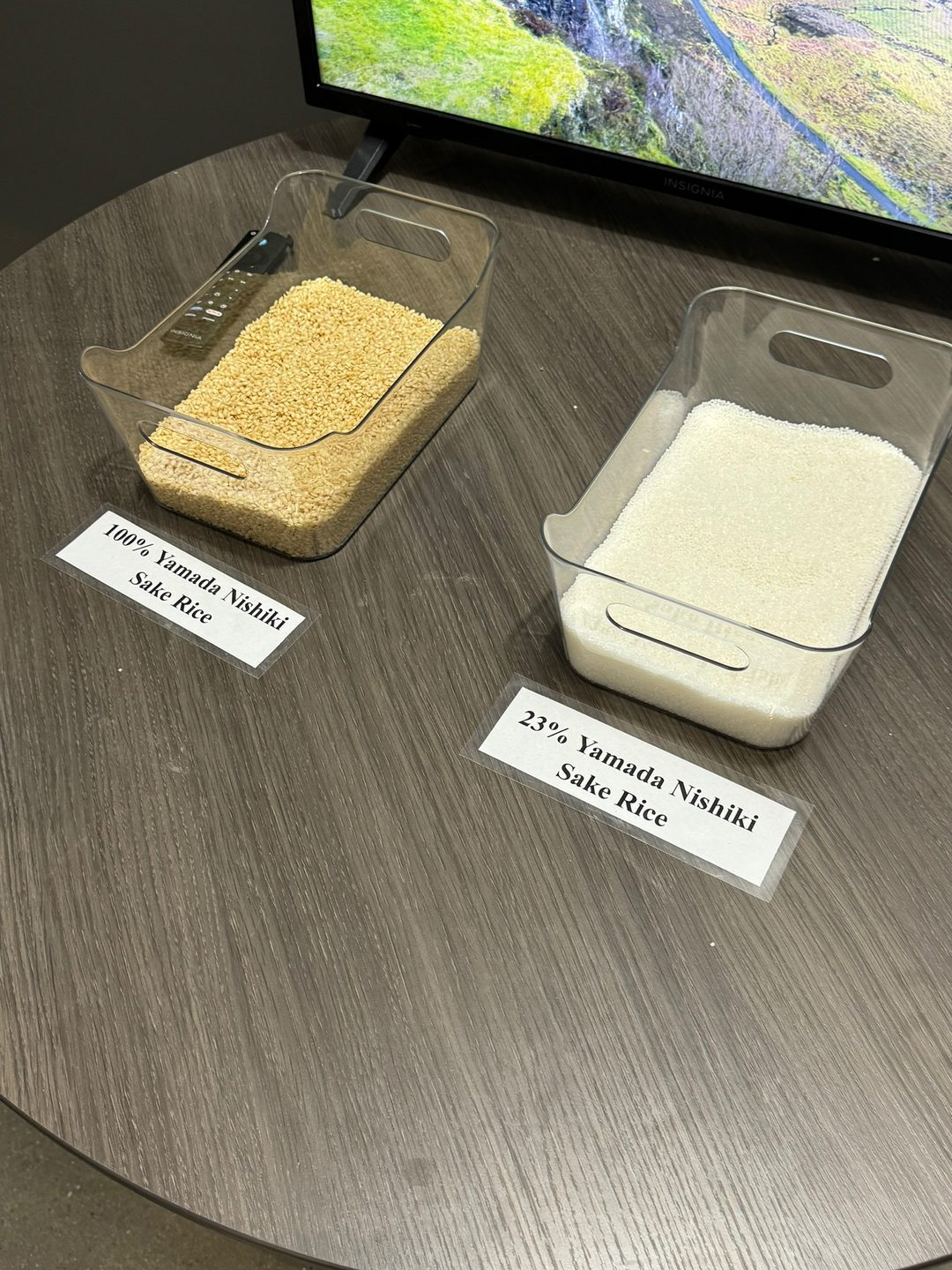
The product line reflects the same discipline. One rice. One grade. Three numbers. Dassai 45, 39 and 23 are simply the polishing ratios, and the lower the number, the more rice has been ground away, the longer it took and the more it costs. A bag of Yamada Nishiki takes about 30 hours to mill to 50 per cent and four full days to reach 23. Above those sits Dassai Beyond, polished to a ratio the brewery declines to publish and priced accordingly. It is the simplest range in premium sake, and that simplicity is the point.
Big in Japan, bigger abroad
The numbers are the kind that make other brewers go quiet. Japanese sake consumption peaked in 1975 and has fallen by roughly two thirds since; the number of breweries has halved. Against that tide, Asahi Shuzo grew from ¥97 million in sales in 1984 to about ¥19.5 billion in the fiscal year that ended the day after our visit, 30 September 2024. That is 200 times over, and every yen of it is Dassai. By 2025 the company ranked eleventh in Japan by volume and third by sales value, which tells you everything about its price point: it sells a fraction of what the big Nada and Fushimi houses sell, and charges accordingly.
Strip out shochu and sundries and the sake business alone was ¥18.7 billion, of which ¥10 billion was domestic and ¥8.7 billion came from exports and overseas sales. Put another way, nearly half of Dassai’s business is outside Japan, and president Kazuhiro Sakurai reckons Dassai accounts for about 13 per cent of the total value of all Japanese sake exported. One brewery, one in every eight yen that leaves the country.
It has not all been plain sailing. In July 2018 the torrential rains that killed more than 200 people across western Japan flooded the Osogoe brewery and cut its power for three days. The tanks were full. Without temperature control the sake inside was no longer Dassai by the house’s own standard, so rather than pour it away the brewery teamed up with the manga artist Kenshi Hirokane, an Iwakuni native, and sold it as Dassai Shima Kosaku, with his salaryman hero on the label and ¥200 from every bottle going to the flood-hit prefectures. Nobody buying it knew whether they were getting a bottle of 45, 23 or Beyond, which I think is the most Japanese fundraising mechanism ever devised. They raised ¥116 million.
In June 2025 the company quietly stopped being Asahi Shuzo and renamed itself Dassai Inc., on the grounds that it had made nothing else for twenty years. The stated ambition is ¥100 billion in sales, ¥70 billion of it overseas.
Why Hyde Park, of all places
Dassai’s export story began modestly, with Taiwan in 2002 and the United States the year after. The American strategy was the Tokyo strategy transplanted: go to the top restaurants in Manhattan, get on the list, and let the city do the rest. Nobody spends real money on a drink they have never heard of, so the restaurant table became the sales floor. Within a decade Dassai was in 18 countries and the Sakurais were flying to Paris and New York to pour it themselves. In 2018 they opened Dassai Joël Robuchon in Paris with the chef, on the theory that if the French could be persuaded, Americans would follow.
The New York brewery has a longer backstory than most people realise. The invitation came from the Culinary Institute of America, whose Hyde Park campus sits a mile down the road. The CIA had been teaching sake in its curriculum and wanted a partner; Dassai wanted a foothold in American food education and a way to make sake that was American rather than merely imported. The plan was announced in 2018 with production pencilled in for 2019. Then came the 2018 floods at home, and then the pandemic, and the opening slipped by four years. The brewery took over a long-vacant supermarket, and Pelli Clarke Pelli, with their Japanese partner Jun Mitsui, designed two timber-faced buildings, a brewery and a separate rice-polishing plant, that nod to Japan without pretending the Hudson Valley is Yamaguchi.
The Dassai Blue Sake Brewery opened on 23 September 2023 with the governor in attendance and an $80 million price tag, which makes it the largest artisanal sake brewery in the United States and the first Japanese-led one on the East Coast. It is 55,000 square feet with a capacity of 140,000 nine-litre cases a year, a fraction of Iwakuni but enormous by American craft-sake standards. The brewing crew at the start was three veterans transferred from Yamaguchi and seven Americans. Nothing is automated. The rice is washed by hand, the koji is made by hand, and the fermentation is in small tanks, exactly as at home.
The name is the brief. Ai yori idete ai yori aoshi: the dye comes from the indigo plant but is bluer than indigo. In other words, the student should surpass the master. Kazuhiro Sakurai’s stated goal for Dassai Blue is not a decent American facsimile but a sake better than the one they make in Japan, which is either admirable or a hostage to fortune. Possibly both.
The water was the other reason for Hyde Park. The Hudson Valley’s water is harder and richer in minerals than the soft mountain water Dassai brews with at home, and it is being used as it comes rather than engineered to match Japan. Rice, at first, was all Yamada Nishiki shipped from home, but the company had already spent three years coaxing the variety to grow with Isbell Farms in Arkansas, and the Arkansas crop is now in the bottles. New York water, American-grown Japanese rice and a sake that is only sold here. If you are going to be sentimental about anything, be sentimental about that.
What is actually in the glass
If you know the Japanese range you know the house style: pale, pristine, fragrant, with melon and pear on the nose and a soft, almost weightless sweetness that disappears cleanly. It is the sake that converts wine drinkers, and the one that sake traditionalists love to sniff at for being too easy. The three core bottles are Dassai 45 (which replaced the old 50 in 2019 with a slightly tighter polish), Dassai 39 and Dassai 23, with nigori and sparkling versions of the 45 and, at the top, Dassai Beyond, which is silkier and longer than the 23 in ways the brewery refuses to explain.
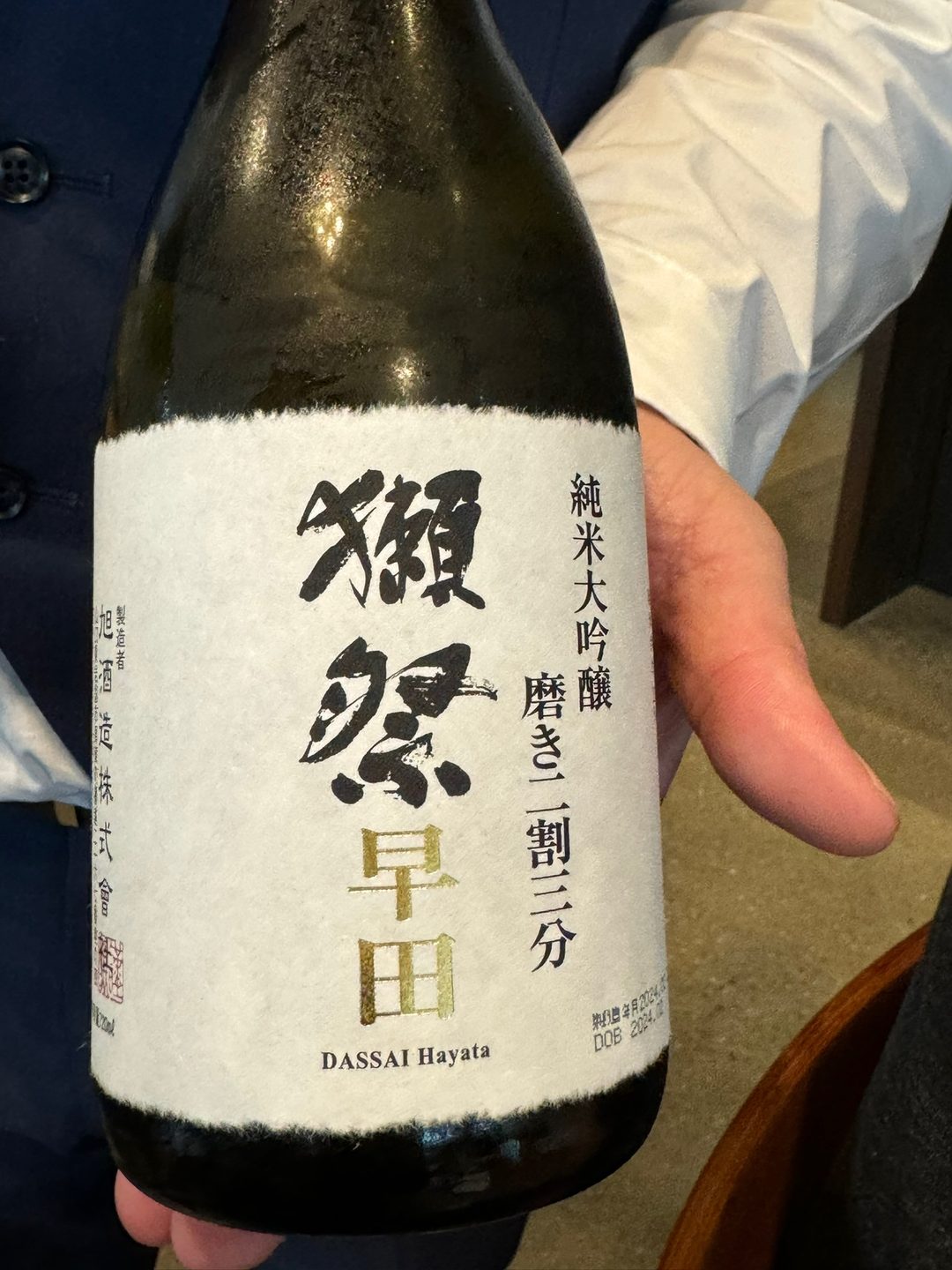
Dassai Blue keeps the grammar but changes the numbers. The core is Type 50, Type 35 and Type 23, all junmai daiginjo, all Yamada Nishiki, all made in Hyde Park with Hudson Valley water. Type 50 also comes as a nigori and as a dry version, and in May 2024 the brewery added a Nigori Sparkling, bottled bone dry at around $19, which is the closest thing to a crowd-pleaser in the range.
The interesting word in all of that is minerality, because it is the one thing the Japanese Dassai does not have. Osogoe’s soft water gives a sake that is all fruit and texture. Hyde Park’s harder water puts a faint saline, stony edge underneath the same fruit, and it shows most clearly in the Type 50, which is bolder and a touch more savoury than its Japanese cousin. The Type 23 is softer and more poised, as a 23 should be, but it still reads as a New Yorker: a little more assertive, a little less polite. Whether that makes it “bluer than indigo” is a matter for the Sakurais and their consciences. What it unarguably is, is a new expression of a brand that has spent thirty years being exactly the same, and that alone was worth our trip.
The tour, the tasting and the sushi
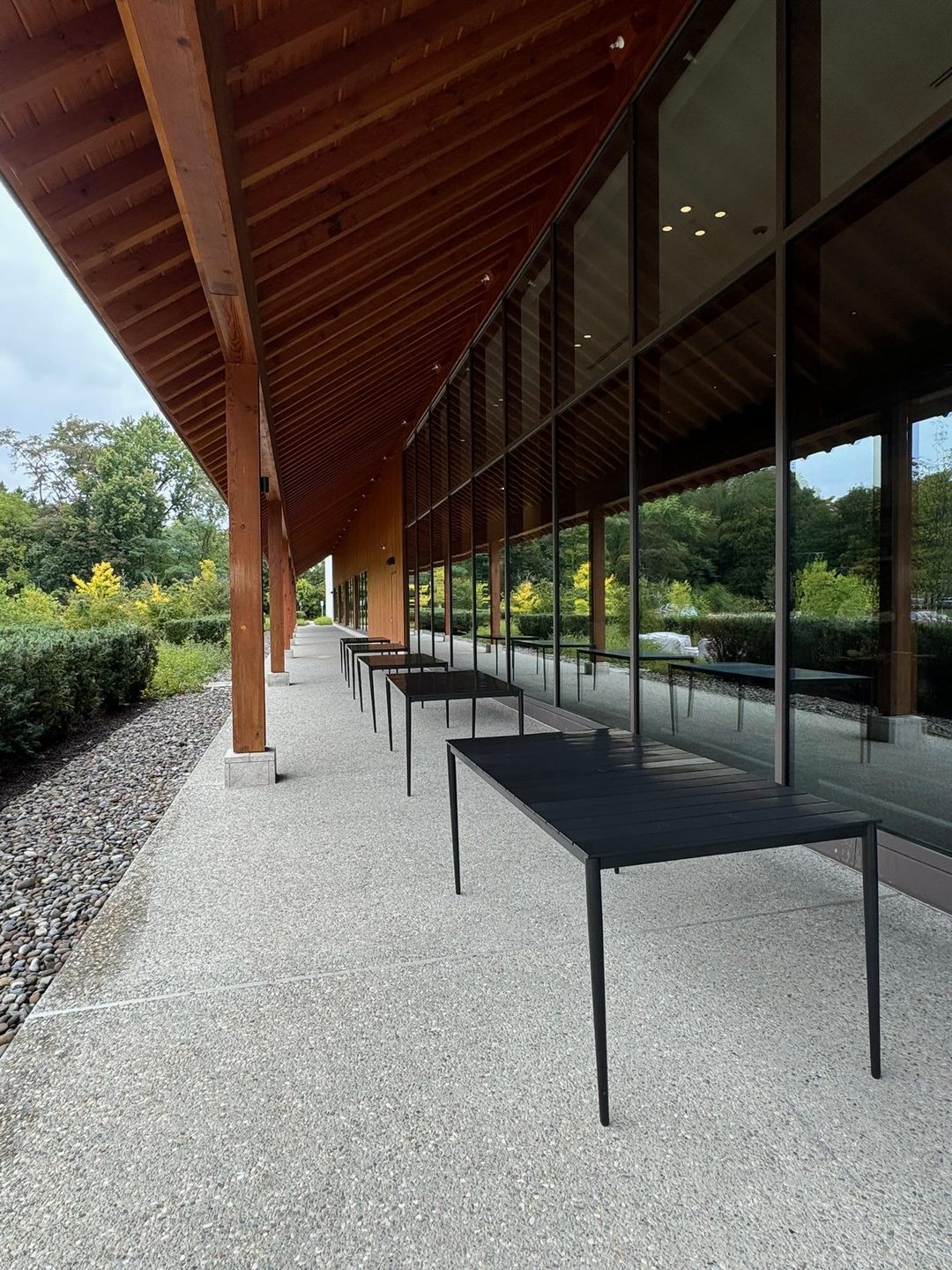
The brewery sits on St Andrews Road just off Route 9, and the first thing you notice is that it does not look like a factory. The timber cladding, the deep eaves and the careful landscaping say Japan without shouting it, and from the car park you can see straight into the brewhouse through a run of tall windows, which is a very un-Japanese thing for a brewery to allow. At home the kura is a sealed, slightly sacred space. Here it is on display, and deliberately so: the whole building is an argument that sake is something Americans should be able to see being made.
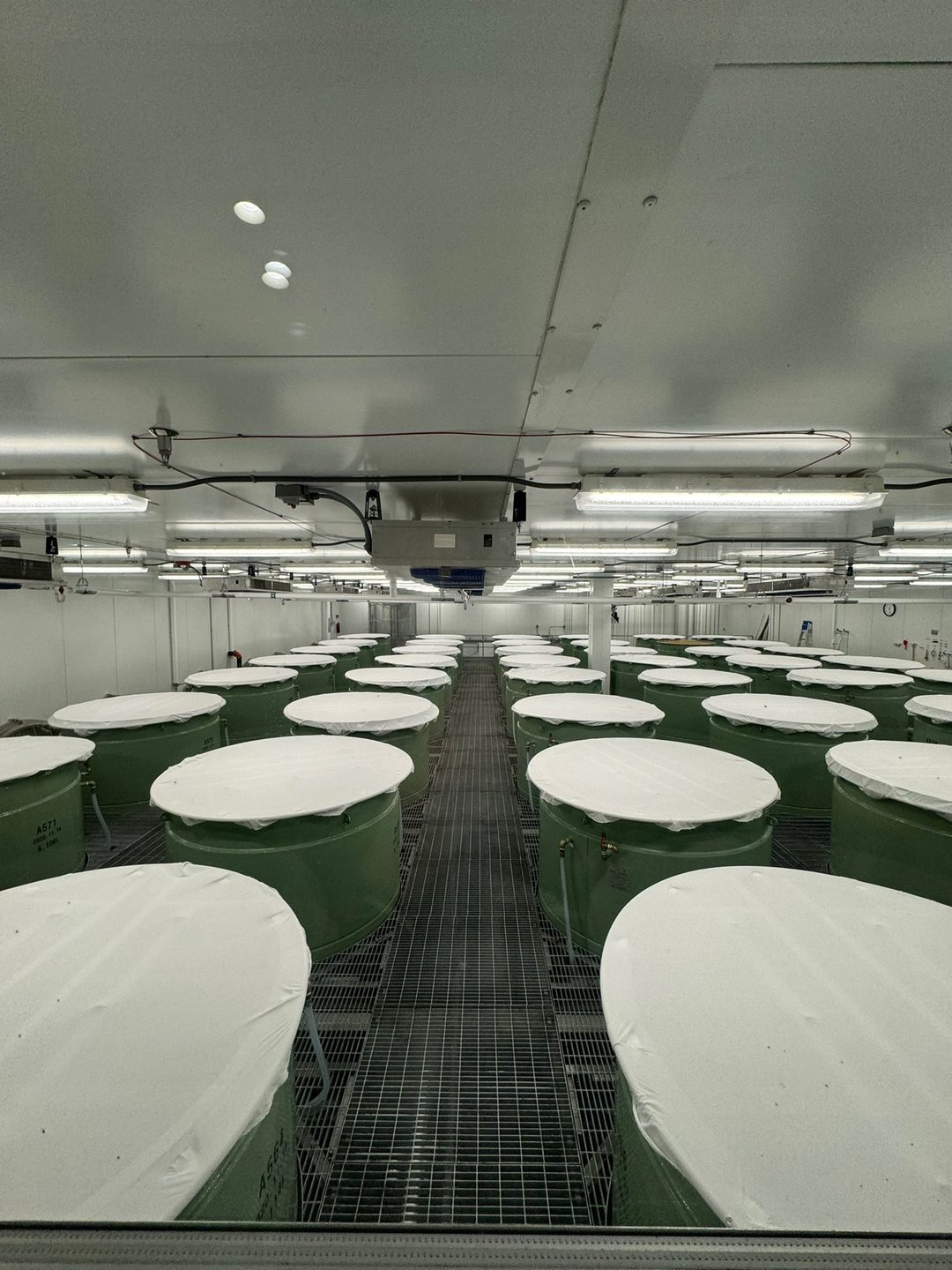
The tour runs about half an hour and is pitched at people who have never seen sake being made, and it is good. You go room by room along the glass: the rice-washing station, where every batch is weighed and timed to the second so the grain absorbs exactly the water it should; the koji room, kept warm and humid, where the steamed rice is spread and turned by hand to grow the mould that turns starch into sugar; the fermentation hall with its small, cold tanks, each one a separate batch rather than an industrial vat; and the press. The displays are museum-grade, with polished rice grains at 70, 50, 35 and 23 per cent lined up so you can see exactly how much of a grain of Yamada Nishiki ends up as bran. As someone who has stood in a fair few koji rooms, I will say that the Hyde Park version is cleaner, brighter and better explained than most of the ones I have seen in Japan.
Then the tasting room…bright, wooden, with a long bar and tables, and the sake served in proper wine glasses because the brewery wants you to get your nose in it. The flight is the three core Types, 50, 35 and 23, poured cold, with the Nigori Sparkling to start. Weekends are the days to come, because that is when they bring in freshly made sushi, and sushi is what we were there for.
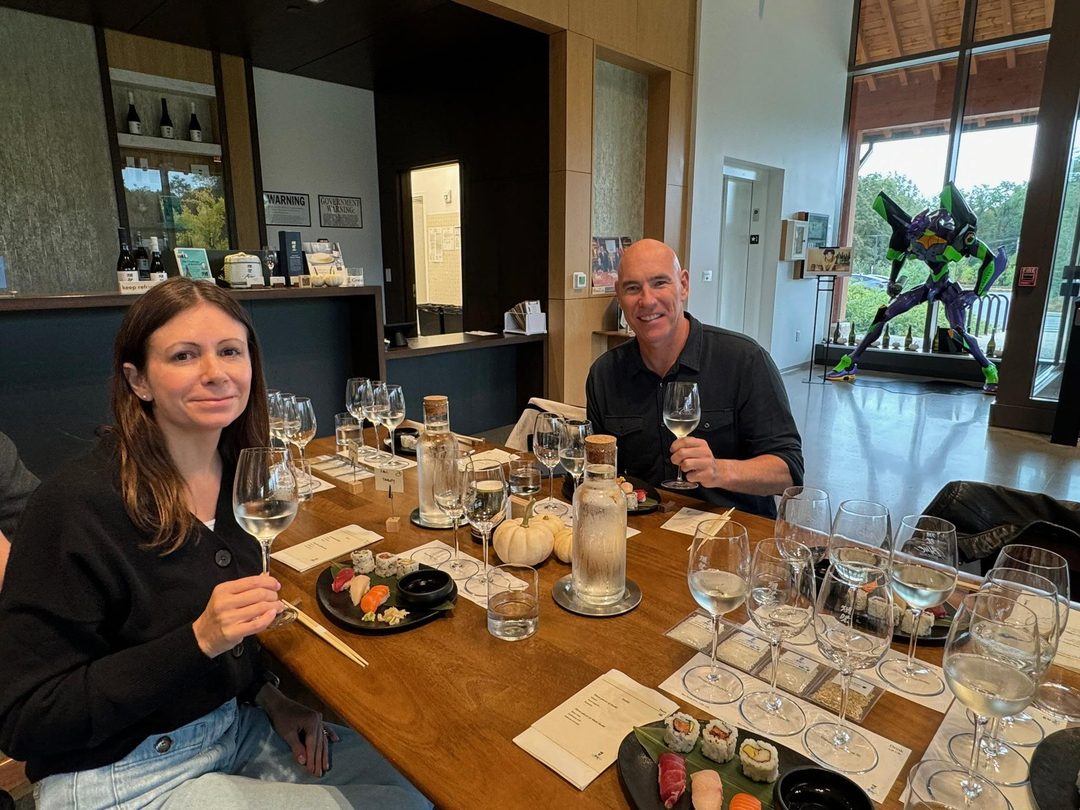
The sparkling went first, as an aperitif should: dry, cloudy, softly fizzy and very moreish, and perfectly happy next to a piece of plain tuna nigiri. The Type 50 was the revelation of the day. Next to the salmon, with its fat and its faint smokiness, the sake’s brine and lemon-curd notes stopped being a curiosity and started being the point; it cut the richness the way a good Chablis cuts an oyster, and the melon fruit came back on the finish. The Type 35 was the gentle one, all white peach, and we both liked it best with the whitefish and the lighter rolls, where anything bolder would have bullied the fish. And the Type 23 was, as always with a 23, something you drink on its own first. It is a quieter, more layered sake, and after a bite of sushi it opened up into that honeysuckle and stone-fruit register the brewery promises on the label. We would happily have taken a bottle home. We did take a bottle home.
What surprised us both was how much the sake tasted of where it was made. We expected a competent copy of the Japanese 50, 39 and 23, and instead got something recognisably Dassai, recognisably junmai daiginjo, and recognisably not from Yamaguchi. That is terroir, whether or not the sake world has decided it is allowed to use the word.
Bluer than indigo?
Not yet, if we are honest, and we do not think the Sakurais would claim otherwise. The Japanese 23 is still the better sake, with a precision and length that come from thirty years of brewing the same thing in the same place. But that is the wrong comparison. The right one is with every other sake made in America, and against that field Dassai Blue is not so much a step up as a different sport. It is also, and this matters more than any tasting note, a serious Japanese house betting $80 million that Americans will drink premium sake made from American rice and American water on American soil. If it works, every other brewer in Japan will have to think about it. If it does not, it will have been a very handsome way to find out.
For me the day was simpler than that. I sat in the Hudson Valley, in the state where I was born, with Lachlin across the table, drinking a sake from the brewery I first fell for in Tokyo, made with water from the river I grew up beside, with sushi, on a Sunday. Two halves of a life, one glass. We will be back.
If you go
Dassai Blue Sake Brewery, 5 St Andrews Road, Hyde Park, NY 12538, about two hours north of Manhattan by car or by Amtrak to Poughkeepsie and a short taxi. Tours and tastings run Friday to Sunday and are best booked ahead at dassai.com; the tour and hour-long tasting is $50 a head with a maximum of twelve per group, and the fresh sushi is a weekend-only extra. The tasting room is open for sake by the glass and flights Tuesday to Sunday without a reservation. You can buy bottles at the door, and if you are visiting from outside New York State, buy them there, because that is the only place in the world you will find them. Keep them cold and drink them within three months. The Culinary Institute of America is a mile down the road and has several good restaurants of its own, which makes a very civilised full day.
Sources
Dassai Inc., Kuramoto Diary #551: fiscal 2024 results
Dassai Inc., Kuramoto Diary #564: 2025 rankings and the ¥100 billion target
Nippon.com, “Dassai: How a Rural Sake Brewery Took On the World”
Sake World, Kazuhiro Sakurai’s seminar at ProWine Tokyo 2025
Dassai Inc., origin of the name “Dassai”
Dassai Inc., “Shima Kosaku and the Heavy Rains recovery”
New York State, Governor Hochul announces grand opening of the $80 million Dassai Blue Sake Brewery
Dassai Blue, “Our story”
Dassai Blue, New York brewery tours and tastings
Dassai Blue, Essential Trio tasting notes
Business Wire, “Dassai Blue Releases Nigori Sparkling”
Valley Table, Spring 2024, “Dassai Blue”