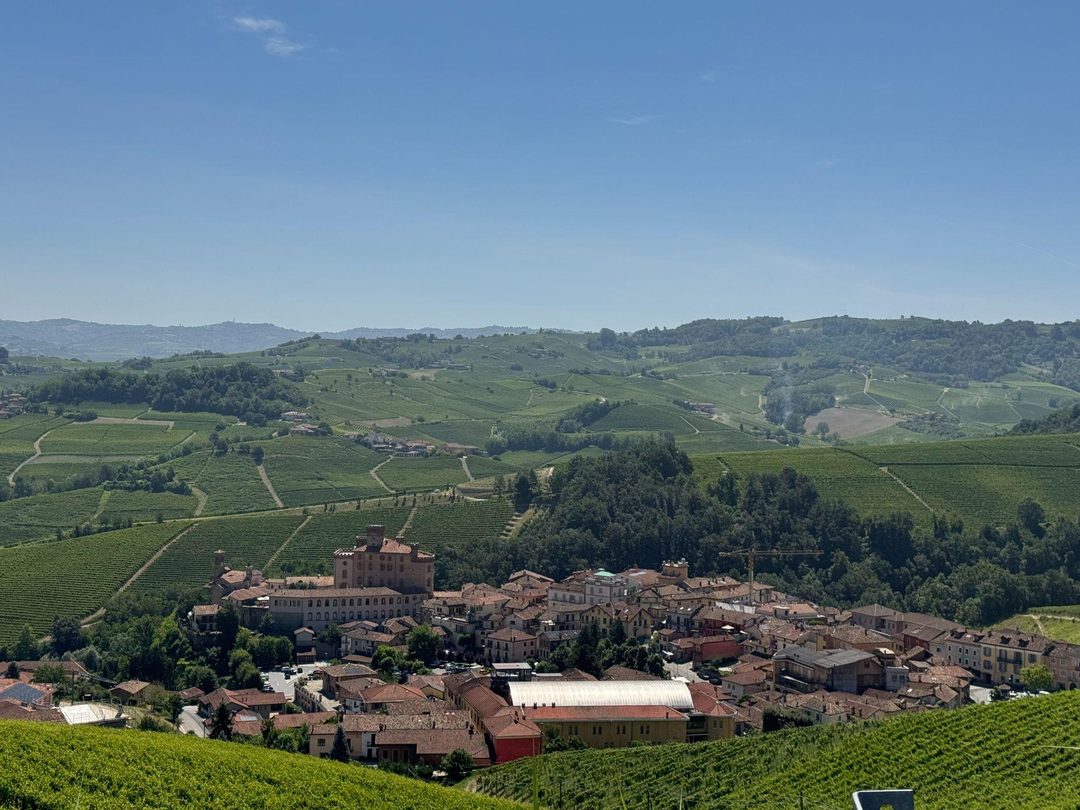
Barolo, the village that gave its name to one of Italy’s most celebrated wines, does exactly that. The road carries that familiar Piedmont light which is golden, soft, falling across rows of Nebbiolo vines that have been growing here for centuries. And yet, the most memorable visit from a June late morning in 2026 was not about the landscape or the prestige of the appellation. It was about a family, a kitchen table warmth, and wines made with the clear and generous intention that they should be enjoyed.
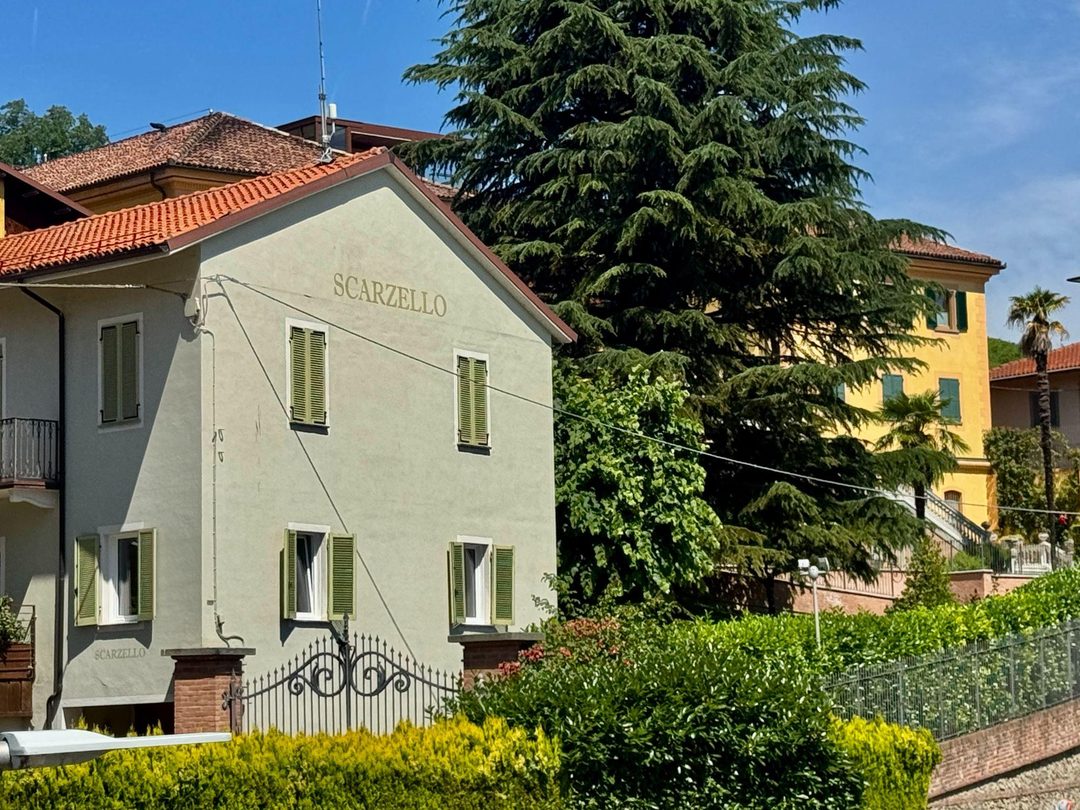
Scarzello Giorgio e Figli sits right in the heart of the village, and that position says something about the family. They are not on the periphery, not making a point of distinction. They are woven into the fabric of Barolo itself. The estate takes its name from Giorgio Scarzello, and today it is carried forward by his son Federico and Federico’s wife Federica, with the tireless presence of Federico’s mother Gemma making herself felt throughout the winery, in the welcome, in the stories, and in the quiet authority that only comes with decades of lived experience.
Seven generations, four of wine
The family has deep roots in this land. They have been part of the Barolo community for seven generations, though it was three to four generations ago that they began vinifying their own grapes, building a cellar rather than simply selling fruit. That shift from grape growers to producers is a decisive one in wine, because it means taking full responsibility for what ends up in the bottle.
Federico began working the estate at seventeen. That early commitment shaped everything that followed: the relationship with the vineyards, the understanding of the cellar, and the very particular confidence that comes not from winemaking school alone but from growing up surrounded by the land and its rhythms. The first wine he made himself is the kind of milestone that never leaves a person.
Meeting the family
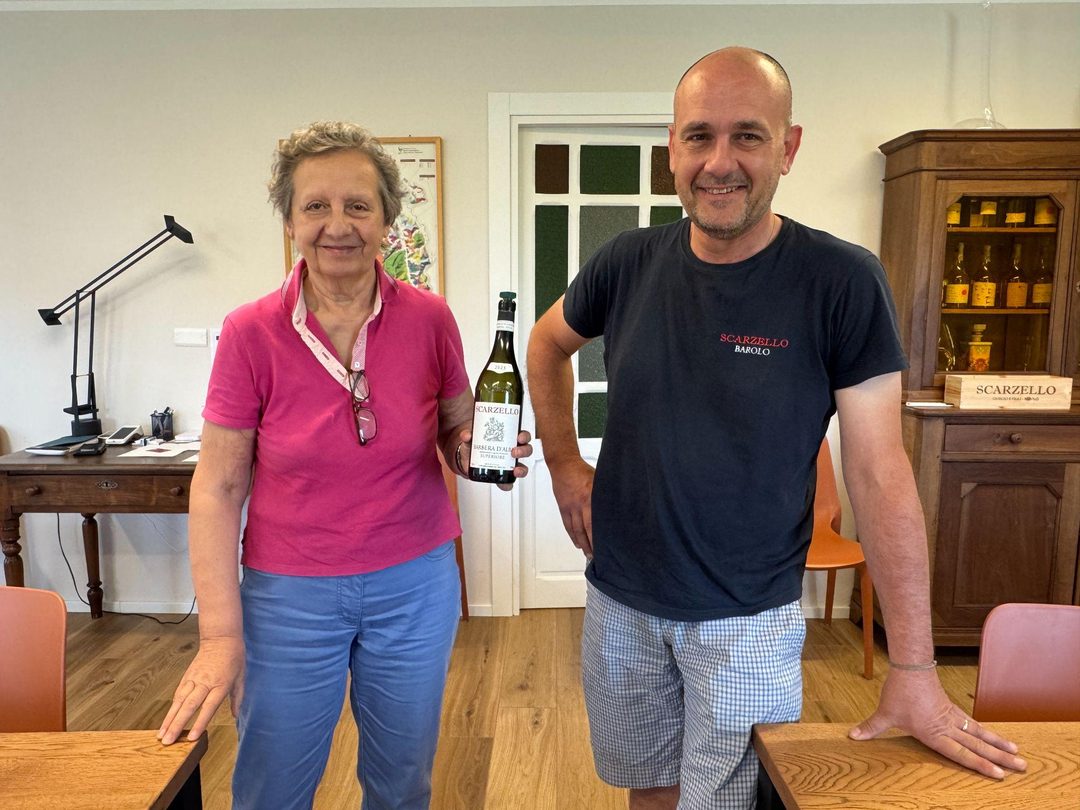
The visit began with Gemma. She greeted us with the welcome of someone who has opened her home to curious wine lovers for decades and found genuine pleasure in it. There were stories immediately. About the vineyards, about the terroir, about the particular challenges of farming Nebbiolo in this corner of Piedmont, including the deer that occasionally make their presence felt among the vines in ways that are equal parts endearing and exasperating.
Federico joined later, and the visit shifted into his stories and his bottles. He has that combination of technical rigour and approachability, a winemaker who can easily and passionately explain the complexities he contends with and the joy he finds in what he produces.
Together, Gemma and Federico gave the visit a texture that only family wineries can. Not curated, not managed, simply real.
Progressive thinking in a traditional setting
Barolo has its orthodoxies. There are debates here, long-running and sometimes fierce, about how the wine should be made, how long it should age, and what it should taste like. Scarzello occupies an interesting position in those conversations. Federico is widely described as a traditional producer, and the estate does produce wines designed to age but the philosophy behind most of the range is something else entirely.
Federico was among the first winemakers in Barolo to work with spontaneous fermentation, using naturally occurring yeasts rather than commercial ones. That choice speaks to a sensitivity to place, a conviction that the microbiome of the cellar and the vineyard is part of the wine’s character and should not be overridden. It is a deeply intuitive approach, but one that requires precision and confidence to execute well.
The result is a range of wines where most are built to be opened now, to be enjoyed at a table with good food and good company, rather than preserved behind cellar doors waiting for an occasion that may never arrive. There is one cuvée made specifically for longer ageing, but the overwhelming spirit of the house is one of generosity and accessibility, wine for people who love wine, not wine for trophies.
The tasting
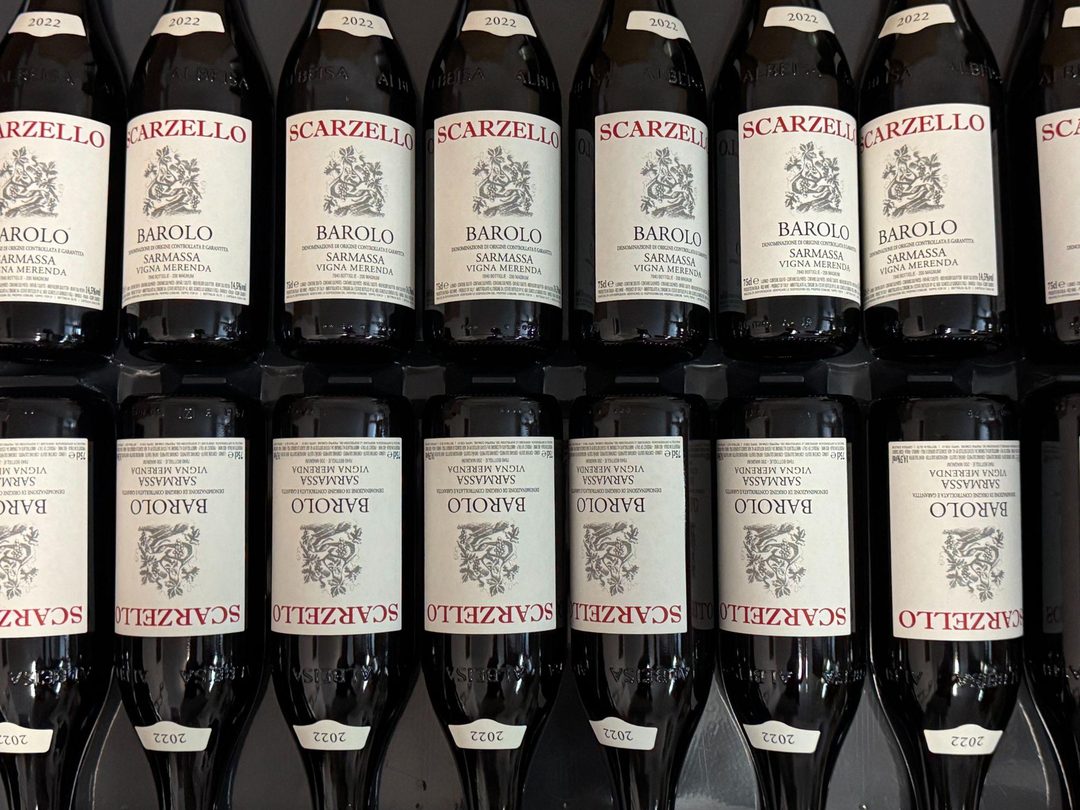
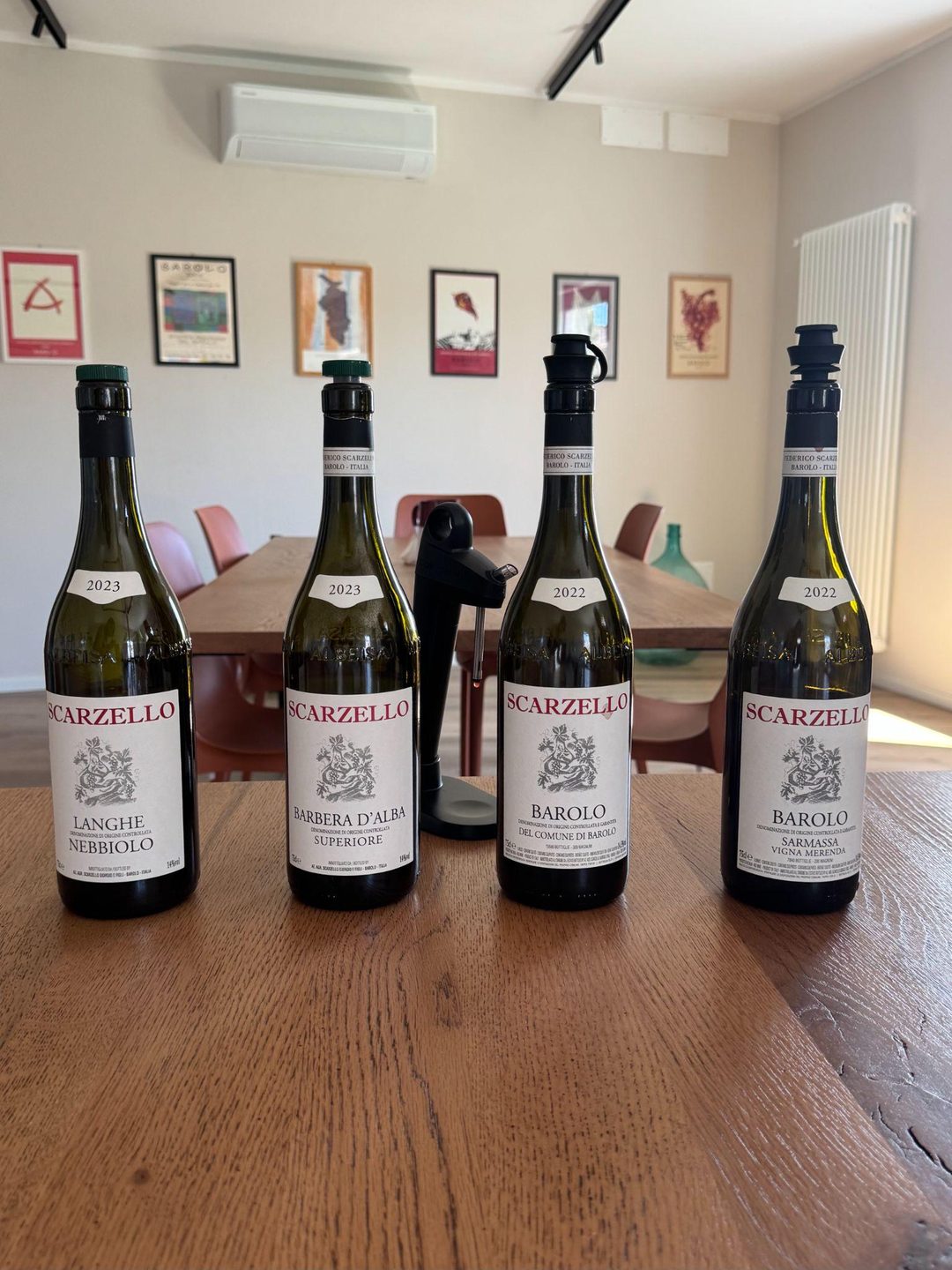
The bottles lined up on the table told the story of the estate in miniature. A 2023 Langhe Nebbiolo, pale and precise, with that characteristic transparency of the grape, floral and light-footed. A 2023 Barbera d’Alba Superiore, richer and more immediate, the kind of wine that reminds you why Barbera has earned its own devoted following in Piedmont. Then two expressions of Barolo: a 2022 Barolo del Comune di Barolo, elegant and already showing real approachability for its age, and a 2022 Barolo Sarmassa Vigna Merenda, from one of the family’s flagship vineyard holdings is a wine with more structure and depth, the one that rewards patience.
Across the lineup, what stood out was a consistent quality of balance. Nothing here is overbuilt or forced. The wines feel like they grew this way, not like they were pushed into a shape. That is harder to achieve than it sounds, particularly in a region where the pressure to make powerful, concentrated wines can be significant.
Why it stays with you
Scarzello is one of those visits that stay with you not only for the wine but for the warmth.
Gemma’s warmth. Federico’s precision and quiet pride in the stories about the first wine he ever made himself. The challenges of the deer in the vineyard. The way a story about seven generations did not feel like heritage marketing, but like something genuinely alive. The generosity of wines made to be shared rather than hoarded.
For Maison V, this is the kind of experience that justifies the entire premise of wine travel. Not the label, not the appellation, but the living story behind it, told by the people who are still writing it. Great wine has always been about more than what is in the glass, and nowhere is that truer than in a family cellar in the village of Barolo, on a warm June afternoon, surrounded by the vines that started it all.