
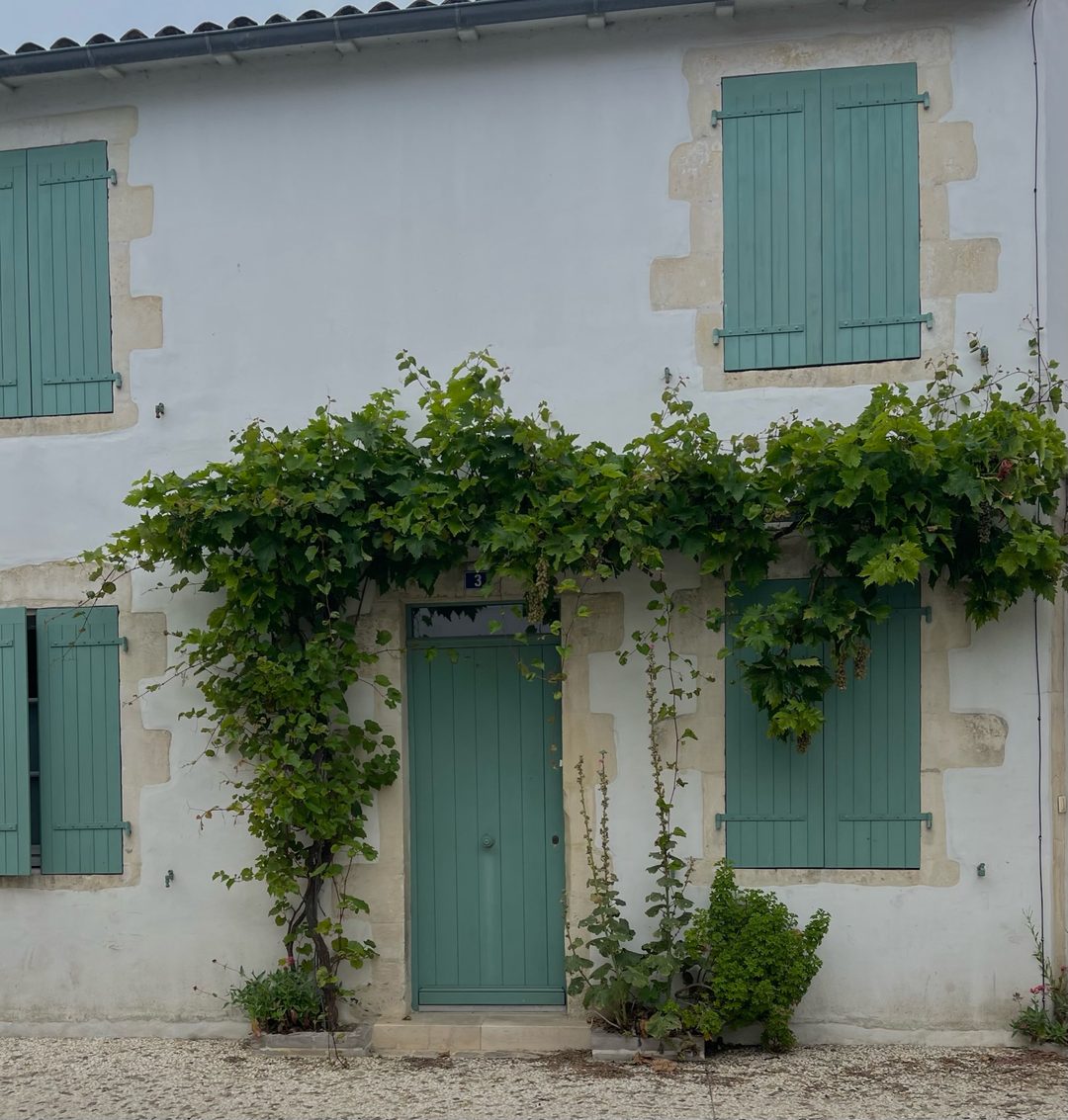
Île de Ré has a way of slowing everything down. Just off the Atlantic coast near La Rochelle, the island is shaped by salt marshes, oyster shacks, sandy lanes, low white houses, and long bike rides under expansive skies. It is often celebrated for its beaches and summer rhythm, yet wine is also part of its cultural landscape, with vines long rooted in this windswept territory.
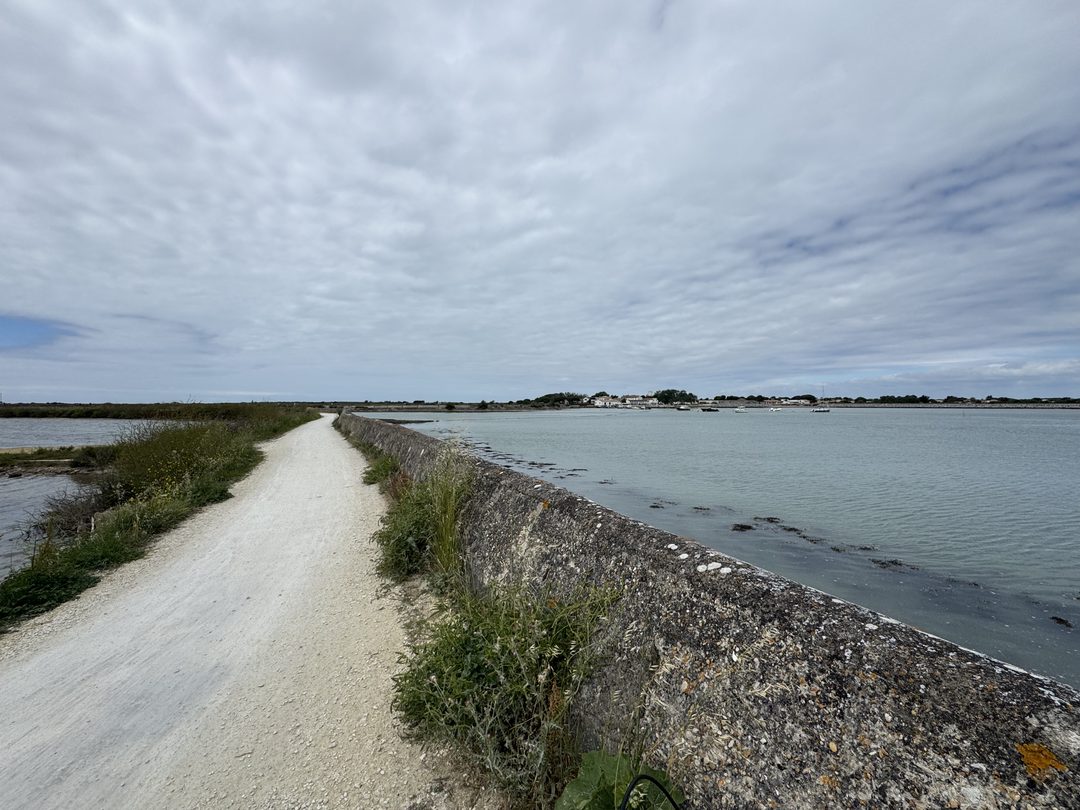
The approach to Domaine Arica feels like an introduction to the island itself. The bike path from La Couarde runs beside the water, the air carries that unmistakable saline softness, and the landscape shifts between sea, marsh, and vineyard. It is this blend of elements that makes wine on Île de Ré feel so compelling: not separate from the island, but completely of it.
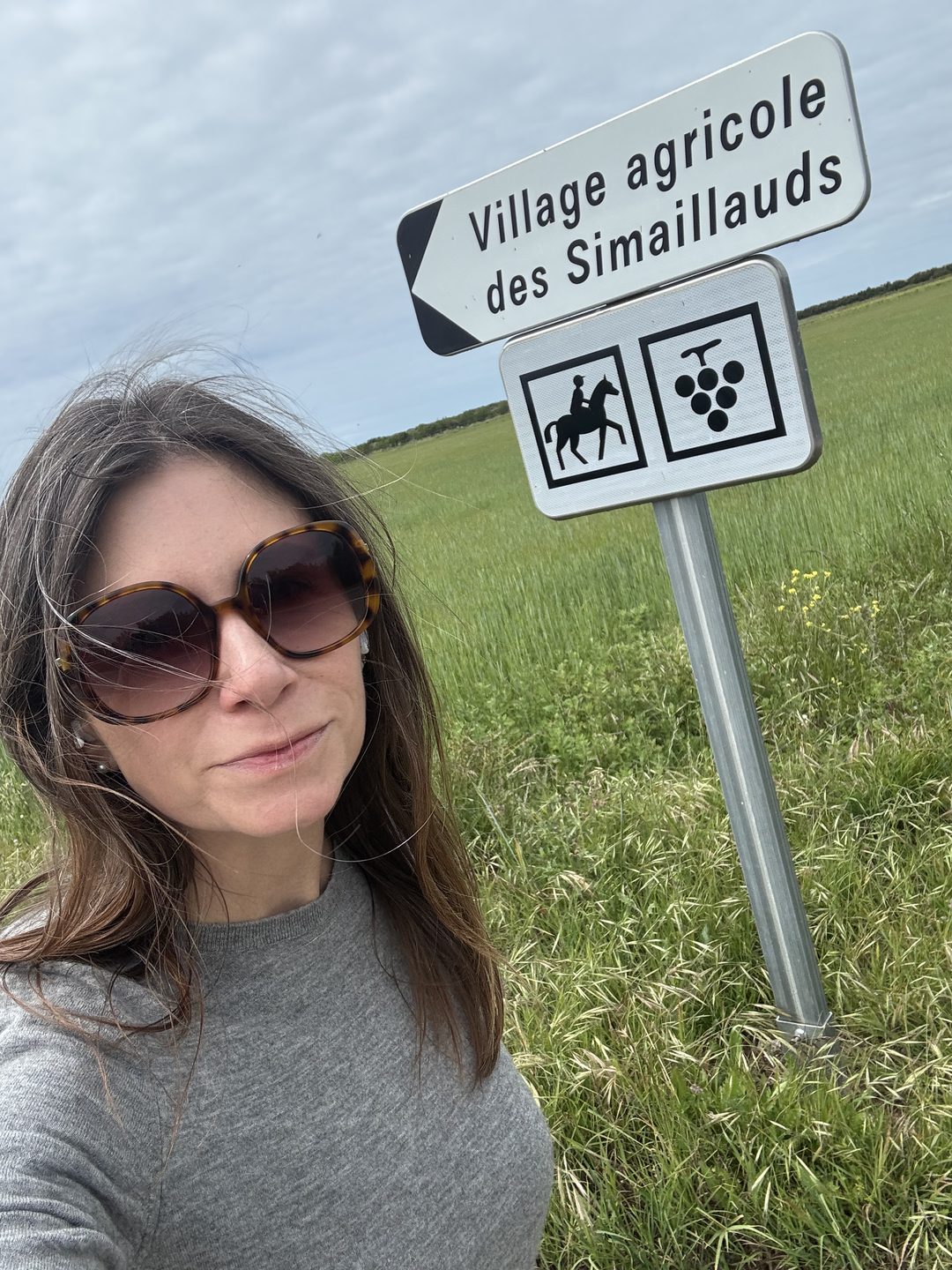
There was a real sense of pleasure in finding the road that leads there. That small moment of arrival mattered, because Domaine Arica does not feel manufactured for tourism. It feels discovered. The story begins before the tasting, in the landscape itself, and in the gentle surprise of realising that this island, so often associated with oysters, salt and bikes, also has a living wine culture worth seeking out.
A new chapter in an old island story
Domaine Arica was founded in 2018 by Marine and Simon, two oenologists with deep roots in wine and a shared ambition to reveal the singular expression of Île de Ré. Marine is from the island, Simon is from Burgundy, and together they built the domaine around a simple but meaningful idea: to create wines that speak clearly of this insular place between land and sea.
Between sea light and vineyard rows
The domaine farms 13 hectares of vines and is fully certified organic, with work in the vineyard grounded in manual care and sustainable practices. The estate lies between La Couarde-sur-Mer and Saint-Martin-de-Ré, and its insular terroir is marked by limestone soils, ocean winds, and the moderating influence of the sea, all of which help shape wines known for freshness, finesse, and a subtle saline edge.
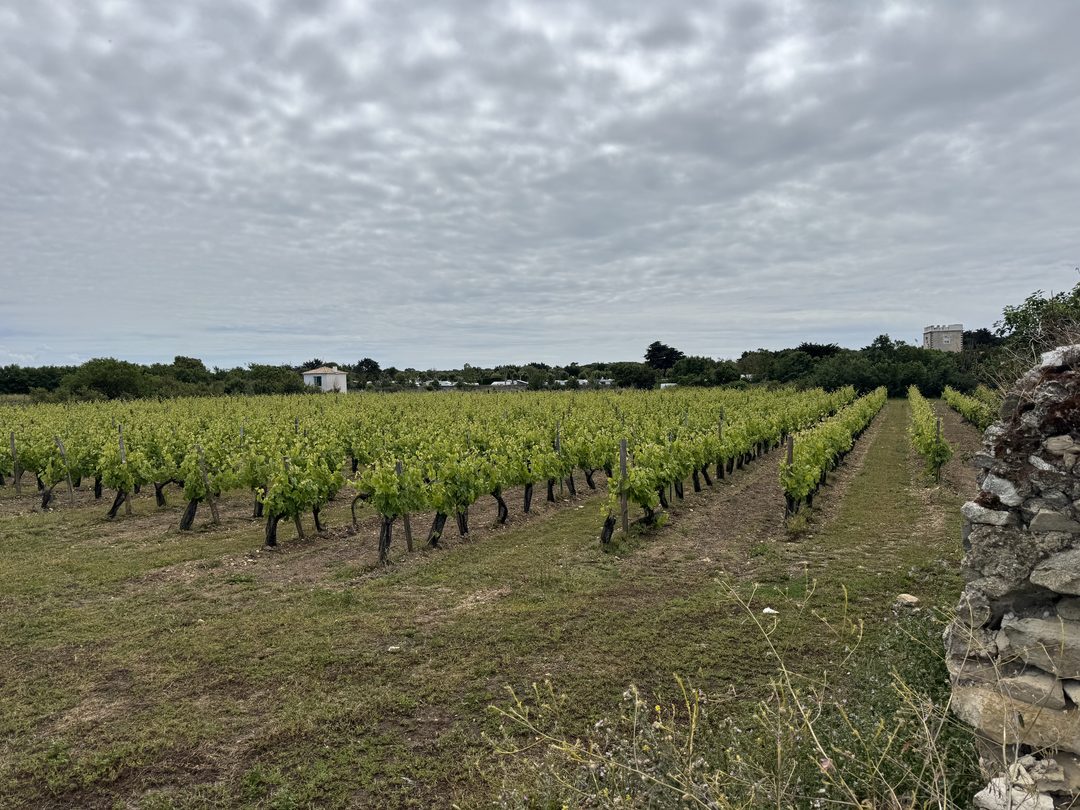
Seeing vineyards interspersed on the island completed the picture. The vines are not dramatic in the way of steep hillsides or grand crus, but that is precisely their charm. They belong to the island landscape. Quiet, low, wind-shaped, and inseparable from the rhythm of local life.
A cellar with clarity and character
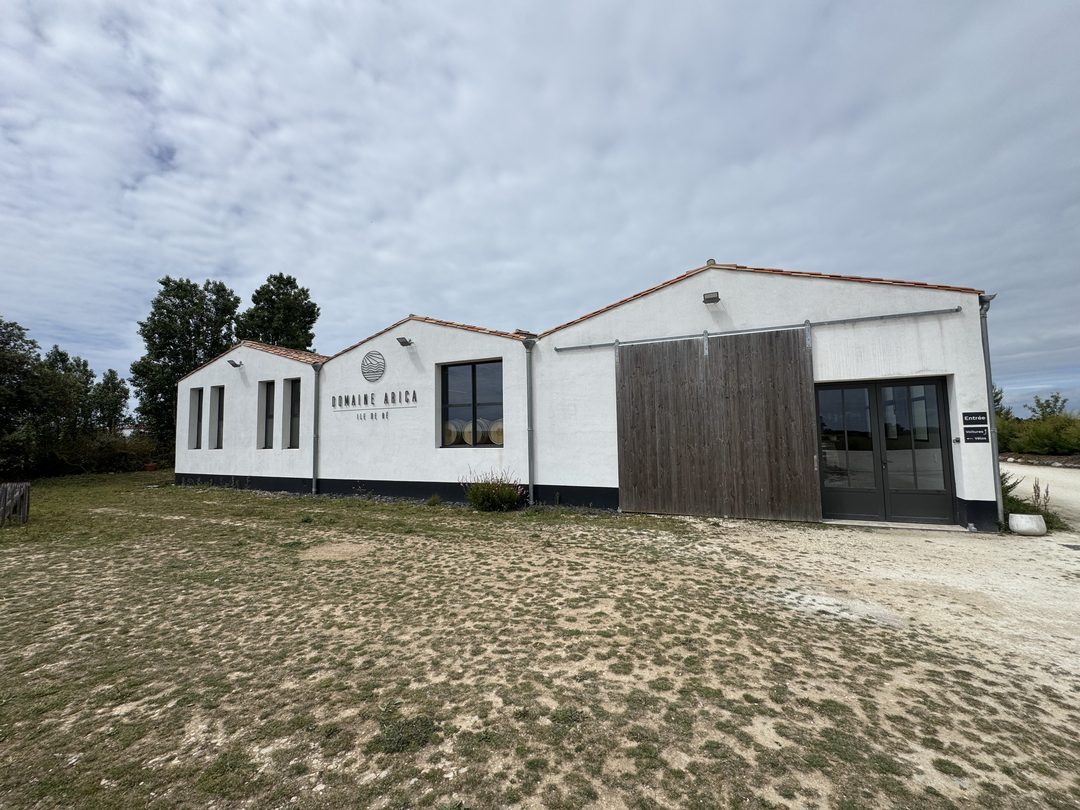
Inside, Domaine Arica feels polished without losing its authenticity. The tasting space and vat room are contemporary and welcoming, designed not just for production but for conversation. Visitors can discover the domaine through short self-guided and accompanied cellar visits and tastings, with direct sales at the winery itself.
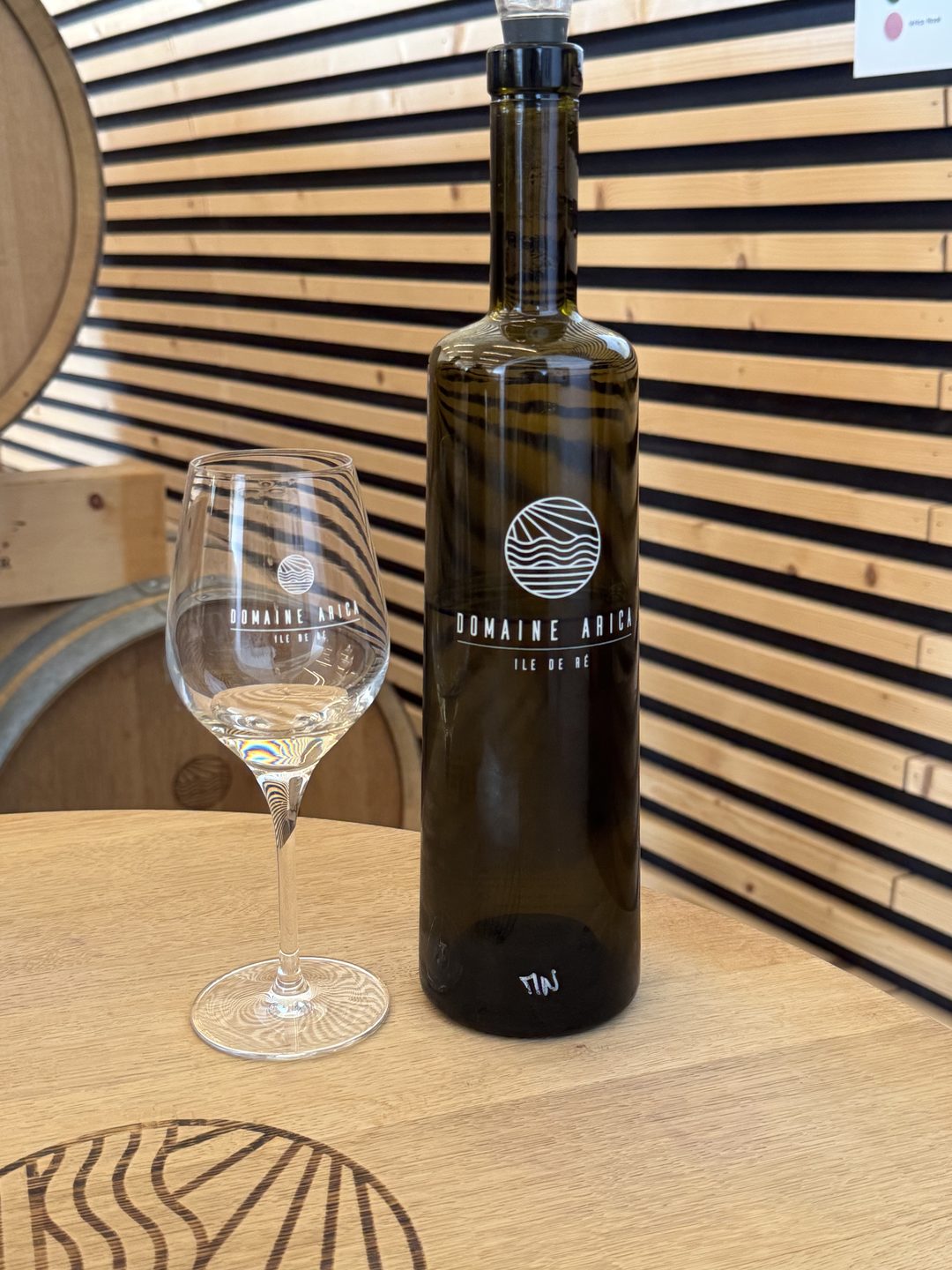
One of the highlights of the visit was meeting Marine, one of the founders, at the tasting bar. The experience carried that ideal balance: knowledge without heaviness, warmth without performance. The domaine’s hospitality reflects the people behind it, and that human connection gives the wines more resonance.
Bottles that tell the story before the first sip
Domaine Arica’s visual identity deserves attention because it is unusually strong. The bottles are elegant and modern, and the branding feels completely aligned with the island: clean, calm, graphic, and memorable. Earlier reporting on the domaine noted that the bottles use enamel screen-printing rather than glued paper labels, a choice described as more ecological and visually distinctive.
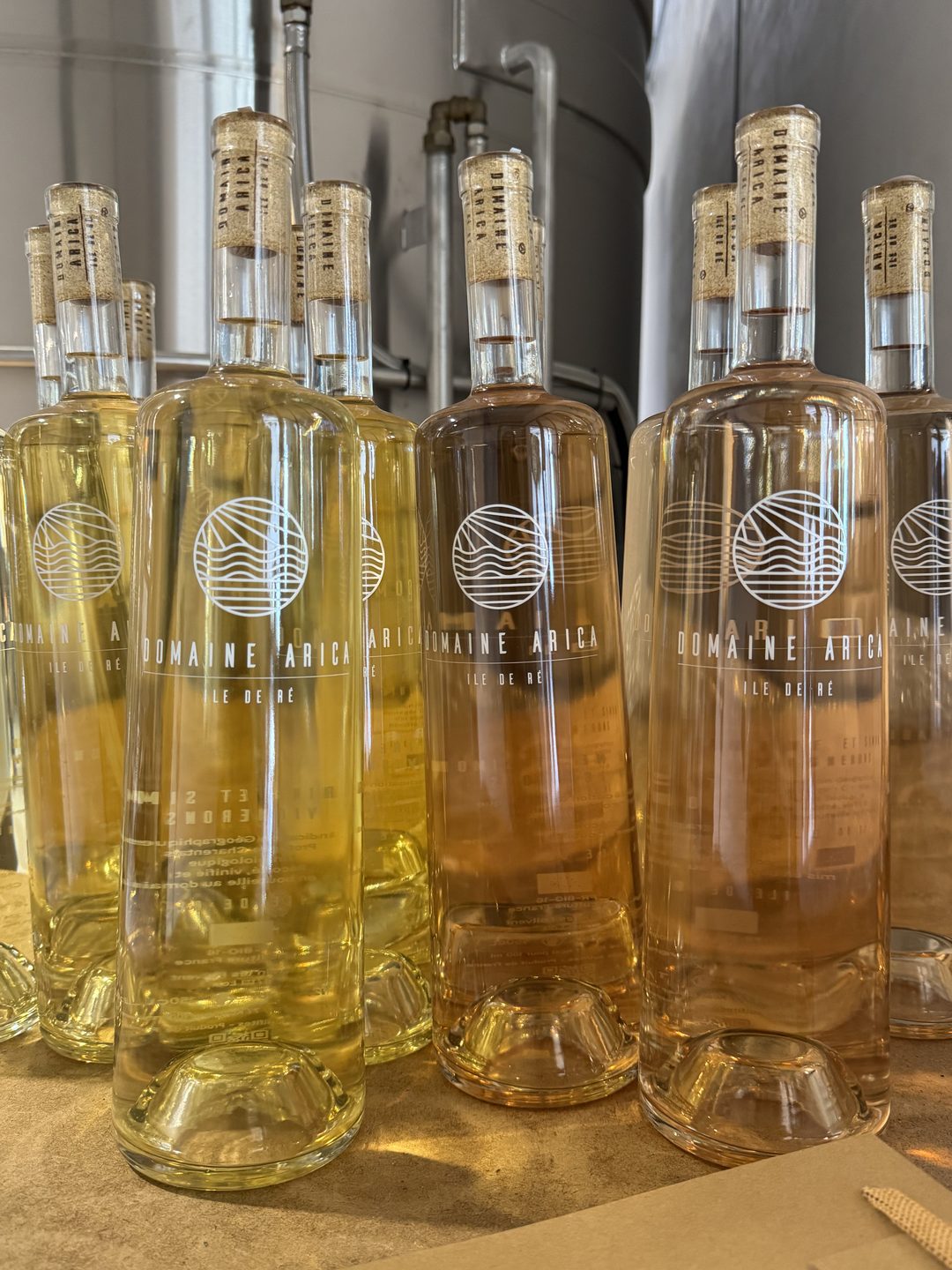
That design choice matters. In a crowded wine world, it gives Arica an immediate presence, but it also feels true to the brand rather than cosmetic. The overall effect is refined but grounded, exactly the kind of aesthetic that makes a bottle feel at home on a summer table near the sea.
Wines made for island life
Domaine Arica presents a focused range that includes Arica Blanc, Arica Rosé, Arica Rouge, Four à Chaux, Moulin Neuf, and Les Salines, with recent vintages also including pineau and grape juice. The whites are made from Chardonnay and Chenin, while the rosés and reds come from Merlot. These are wines that feel naturally suited to Île de Ré: fresh, approachable, and well matched to seafood, oysters, and relaxed lunches that turn into late afternoons.
Production remains relatively limited, which adds to the sense of discovery. Public sources describe the domaine as selling directly at the estate and through shipment, while regional and retail listings indicate production in the range of roughly 80,000 to 85,000 bottles, with a strong local and professional presence. That relative scarcity outside the island and nearby region is part of what makes the wines memorable. They still feel tied to place.
Why this place stays with you
What makes Domaine Arica stand out is not one single thing, but the way everything comes together: island geography, organic viticulture, the founders’ story, the architecture, the bottle design, and the ease of the wines themselves. It is a brand with coherence.
For Maison V, this is exactly the kind of story worth sharing. Travel is richer when it is anchored in context: the history of a place, the people building something meaningful there, and the sensory details that make it unforgettable. Domaine Arica is not only a winery visit on Île de Ré. It is a window into the island’s character.